
By Jordan Vale
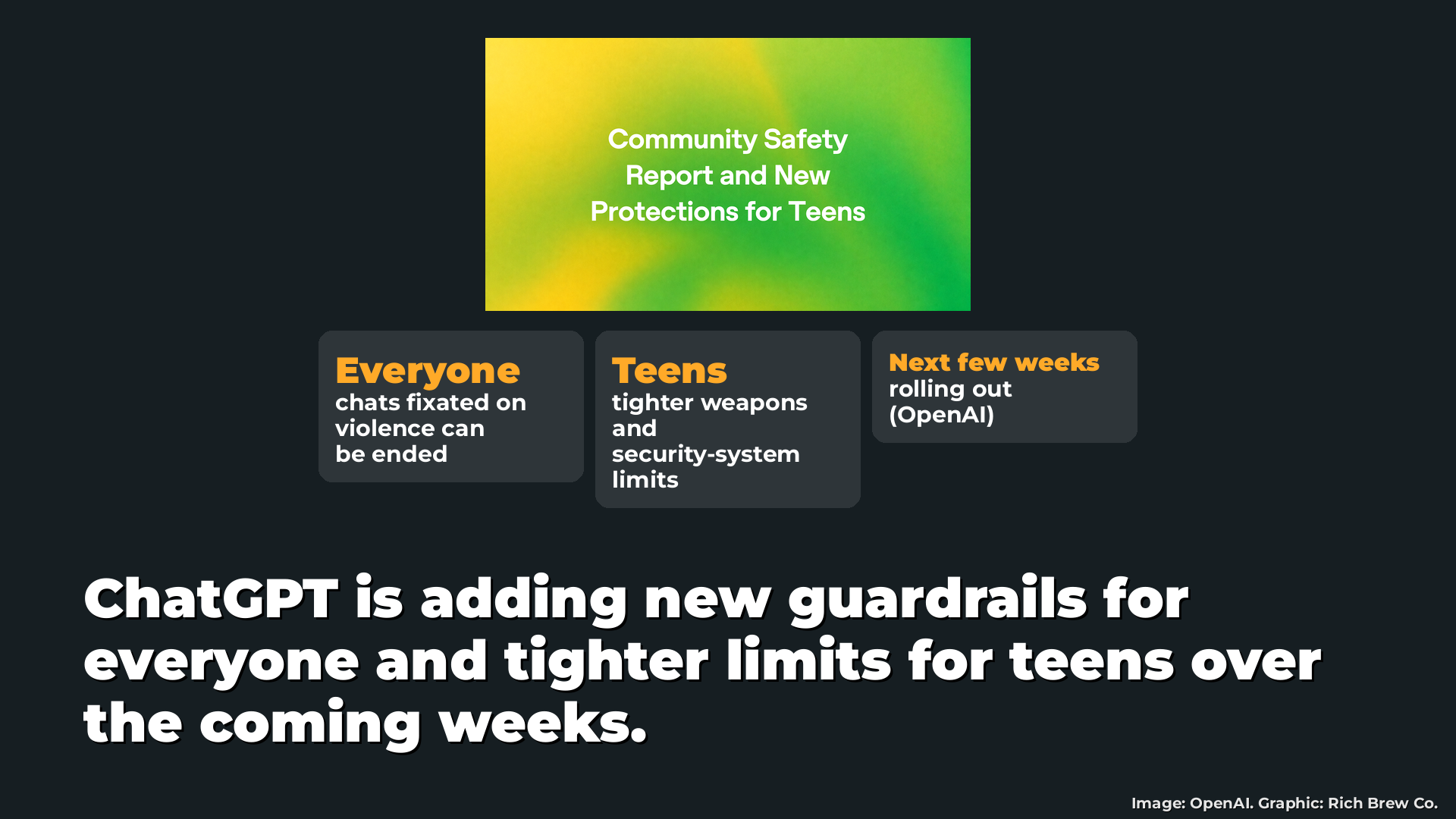
If there is a teenager in your home, there is a good chance they have asked a chatbot for help with homework, or with something harder to say out loud. OpenAI says ChatGPT is getting new safety limits for everyone, and tighter ones for teens, over the next few weeks. Here is what OpenAI says will change, what stays the same, and what to do if the app mistakes you for a teenager.
What OpenAI announced
In a post on October 30, OpenAI described several changes. The company says they "will begin rolling out in the next few weeks," so they are not live for everyone yet.
- Chats can be ended. When a conversation shows signs that someone is fixating on violence or on seriously harming another person, ChatGPT will be able to end the chat automatically. If that happens several times, OpenAI says it may temporarily pause the account.
- Less detail about past attacks, for everyone. People can still ask ChatGPT to help them understand such events, how victims and communities were affected, and how to spot warning signs. But it will give less detail about past mass attacks and the people who carried them out, even when that detail is online elsewhere. OpenAI says this applies "regardless of a user's age or reason for asking."
- More careful after warning signs. When recent chats show warning signs of possible violence, ChatGPT will be more cautious about sharing information that could be misused.
What changes for teens
ChatGPT already has a teen version for users under 18. OpenAI says it will now limit practical information about weapons and security systems for teens, even when a question looks harmless and there is no sign of bad intent.
OpenAI says teens can still use ChatGPT to help calm a tense situation, seek support, and connect with a trusted adult.
Think of it like a school library that keeps some books behind the desk. Students can still learn about history and get help. They just cannot take home a how-to manual.
If the app thinks you are a teen
OpenAI uses age prediction, a system that looks at signals such as behaviour patterns to guess whether someone may be under 18. The company says it now keeps checking new signals while people use ChatGPT, and moves likely teens into the under-18 experience.
Adults who are placed there by mistake can confirm their age through Persona, OpenAI's age-checking partner, and have the extra teen limits removed. OpenAI calls this a "fast, privacy-protective" option.
The human side
For parents, the most useful piece may be parental controls. Parents can link their ChatGPT account to their teen's account. OpenAI says linked accounts can already get alerts in some serious cases, including, since July, if a teen's account is deactivated for breaking its rules on violence. It says it is working on alerts for when a teen's account is paused for repeatedly discussing violence.
OpenAI also says it made more than 200 referrals to law enforcement in the third quarter of 2026, as part of flagging imminent threats of violence to police.
Ink, not pencil: these are OpenAI's own descriptions and promises. No outside group has tested how well the new limits work. OpenAI says its first public Community Safety Report, covering the second half of 2026, will come in early 2027, with updates every six months.
Why regular people should care
Chatbots are now part of family life, a bit like the family computer once was. These changes affect what the app will and will not say to your kids, and possibly to you. It is a good moment for a calm talk at home: what your teen uses ChatGPT for, whether you want to link accounts, and who they can talk to when something feels heavy.
What's next
Watch for the changes to appear over the coming weeks, and for parent alerts about paused accounts, which OpenAI says it is still building. The real test comes in early 2027, when OpenAI's first safety report should show how often these tools step in, and how well.