
By Jordan Vale
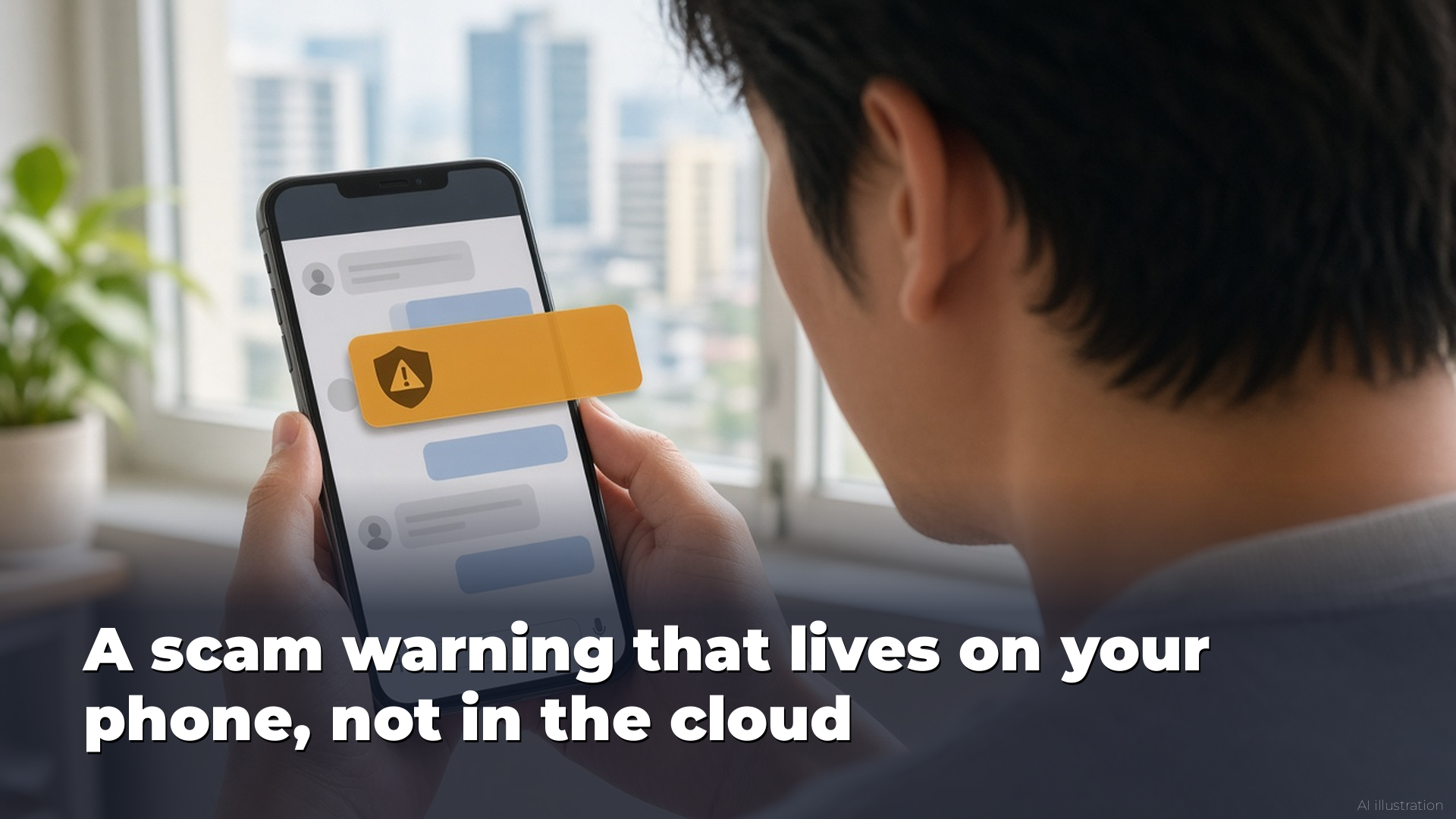
Most scams today don't start with a strange link. They start with a friendly chat. A new tool built in Singapore is designed to tap you on the shoulder in the middle of that chat and say: wait, check this first.
Think of an older aunt who gets a polite message from someone claiming to be from her bank. Over a few days the chat feels warm and normal. Then comes the request: move your savings to a "safe account." By then, trust has done the work.
The news. On October 14, Google DeepMind and the Government Technology Agency of Singapore (GovTech Singapore) announced a small scam-detection model that runs directly on Android phones. It was presented at Singapore International Cyber Week, The Straits Times reported.
Why Singapore built it
The size of the problem. Scams such as fake investments, fake job offers and people pretending to be officials make up more than half of Singapore's reported crimes, according to Google DeepMind. They have cost more than S$4 billion (Singapore dollars) since 2019.
The shift in tactics. Scammers now build trust through long, convincing conversations before they ask for money. Google DeepMind says these "social engineering" scams account for up to 80% of losses.
How it works, in plain words
Trained on local tricks. The team took Google's small Gemma model and gave it extra training on local scam conversations, such as people pretending to be banks, public agencies or well-known local figures. Google DeepMind says the training used anonymised data from scam reports, not private citizen data.
Two steps, light on battery. First, a very light filter looks at incoming messages for warning signs. If something looks off, a second, smarter check reads a bigger piece of the conversation to confirm the threat or drop a false alarm. If it is a real risk, a warning pops up asking you to pause before sharing money or private details.
It works a bit like a smoke detector. Most of the time it sits quietly. It only speaks up when it senses smoke.
Privacy first
Your chats stay on your phone. "On-device" means the checking happens on the phone itself, not on a company's computers. Google DeepMind says that neither Google nor the Singapore government will be able to read users' conversations, and that the model will only see chats with the user's consent, inside apps that include it.
"Fighting scams shouldn't mean sacrificing personal privacy," said Mark Chen, Director of Trust and Safety at GovTech Singapore.
Ink, not pencil: this is not on anyone's phone yet. There is no public release date and no list of apps, and neither partner has shared numbers on how often it catches scams or raises false alarms. Google DeepMind says the rollout will be "carefully phased."
Why regular people should care
Scams hurt real families, and they often target the people least likely to spot them. A warning that shows up at the exact moment someone is about to send money could stop a loss before it happens. And it does this without handing your private messages to anyone else. If the idea works, it could become a quiet safety net for parents, grandparents and anyone who has ever trusted a kind stranger online.
What's next
Singapore first. The roll-out will be phased and worked out with the Singapore government. Google DeepMind says it is also exploring similar tools for other countries, but has given no timeline. Until then, the old advice still works best: if someone you have only met online asks for money or passwords, stop and call someone you trust.