
By Jordan Vale
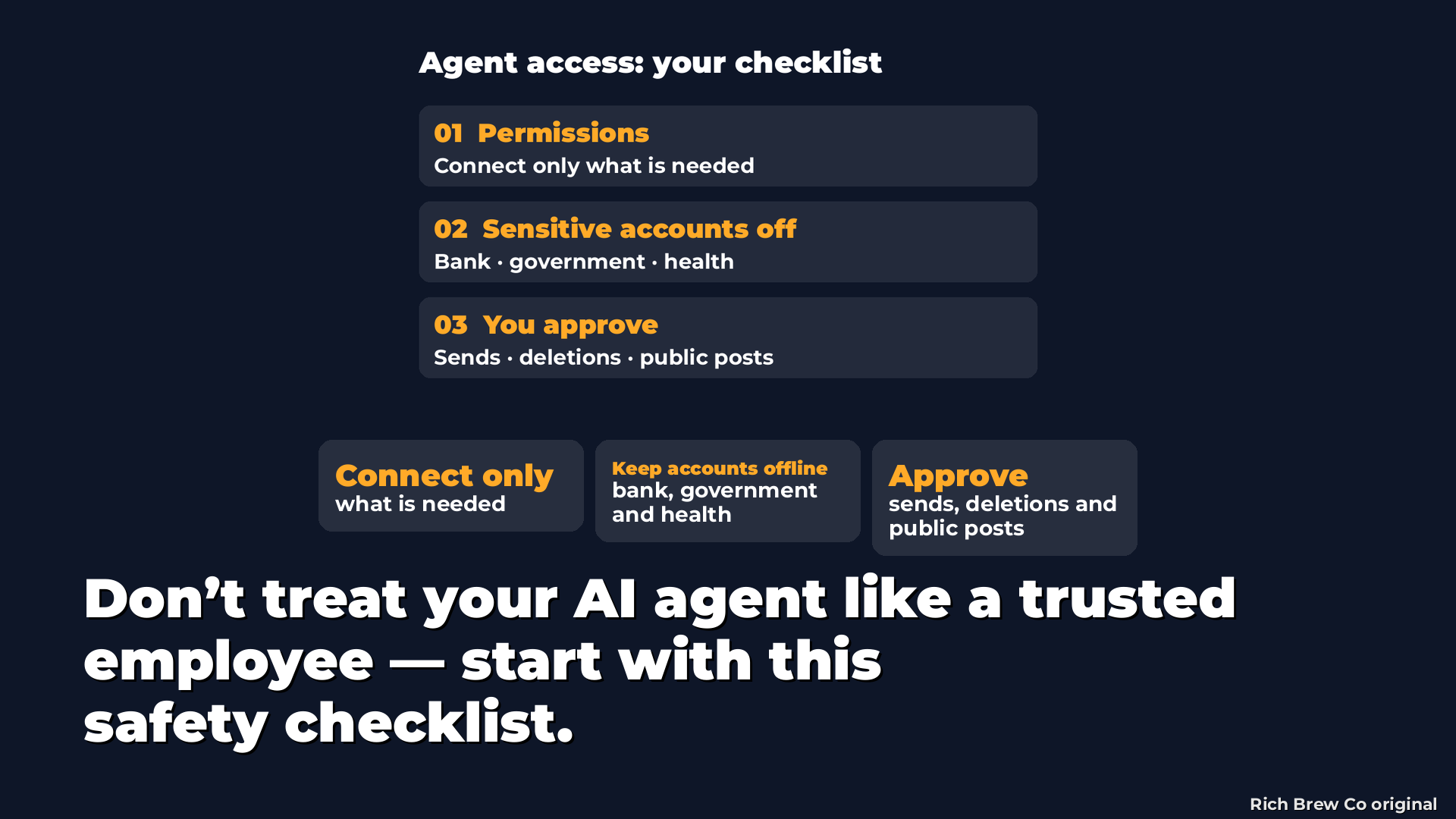
An online helper can save you time without getting the keys to your whole digital life. Singapore’s new checklist offers a practical starting point: connect less, approve important actions and know how to disconnect.
Think of lending someone a house key for one job, rather than handing over every key you own. For a person connecting an email account, the information at stake includes messages from friends and family, not just their own.
A checklist, not a new law
On November 6, Singapore’s Cyber Security Agency (CSA), Government Technology Agency (GovTech) and Infocomm Media Development Authority (IMDA) issued a joint consumer advisory on personal artificial intelligence (AI) agents.
Unlike a chatbot that mainly answers questions, an agent can manage email, make bookings and use online accounts. CNA’s report lists Dots, Hermes, Muse, Grok Bot and OpenClaw as examples, not a ranking or recommendation.
“AI agents can be very useful, but you cannot treat them like human assistants and give them the same broad access to your information and implicit trust,” the authorities said, as quoted by CNA.
The advice is consumer guidance, not a new law or licensing scheme.
Keep the important switches yourself
CNA reports these practical steps:
- Limit access. Connect only necessary accounts. Start with limited or read-only permissions. Avoid banking, government and healthcare accounts; do not share credit-card details, passwords or one-time passwords.
- Approve consequential actions. Require approval before messages, file deletions, sharing or public posts. Prefer one-time approval over “always allow.”
- Use app settings. Manage permissions there, not through chat instructions alone. Review and remove unnecessary access.
- Check data use. Find out what is stored, shared or used for model training and advertising. Review persistent memories, too.
Malicious instructions hidden in websites, emails, calendar invitations or documents can mislead agents. Some keep working in the background, making monitoring important.
Ink, not pencil: Users remain responsible for actions taken on their behalf and may face liability depending on the circumstances and law, CNA reports.
Why regular people should care
The useful middle ground is control, not blanket trust or blanket rejection. Smaller permissions limit what a mistake can affect.
What's next
If something looks compromised, stop the agent, disconnect affected accounts, review activity and change passwords. If money may be at risk, lock cards or use the bank’s kill switch and call its official number.