

Synchrony: Finding the Shared Aging Signal
A prize idea for proving whether the body ages on one clock — and whether that clock can be changed.
The puzzle
Your body ages as a unit. A 70-year-old does not walk around with a 40-year-old liver next to an 80-year-old heart. Skin, muscle, brain, and blood stay roughly on the same calendar. That is strange. Thirty-five trillion cells do not hold a morning meeting to agree on how old they are. Something must be keeping them in step.
Elon Musk’s version of the same observation is simple: you never see someone with an old left arm and a young right arm, so there is probably a shared “clock.” The proposal is not to hunt for a tiny watch inside the body. It is to find the signal that tells tissues how old to act — and to prove you can change it.
What we already know
Two facts turn that idea from a metaphor into a research question.
First, transplanted hearts follow the body they live in. Put a heart from a young animal into an old one, and that young heart quickly starts looking old at the molecular level. Do the reverse — an old heart into a young body — and the old heart starts looking younger. The heart is not carrying a private odometer that cannot be rewritten. The body around it is telling it what age to be. One transplanted heart does not, however, drag the rest of the body with it. So the heart is not the master clock. It is following orders.
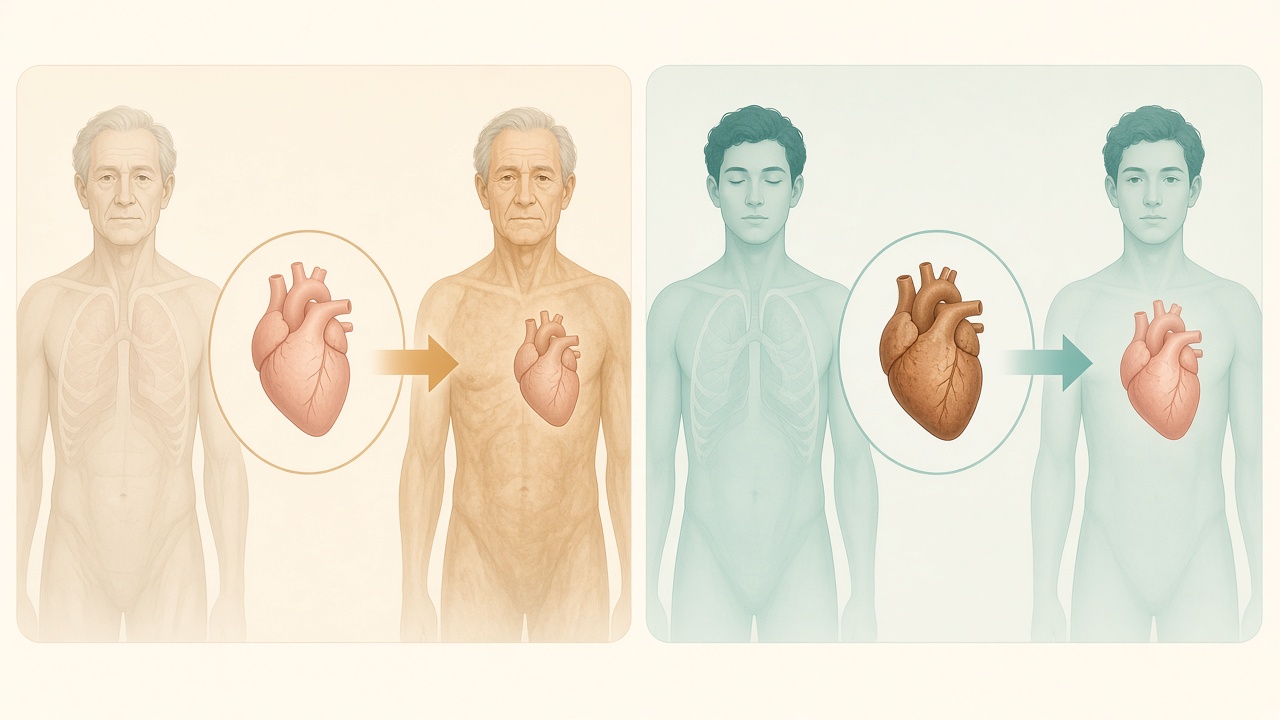
Second, some rare diseases look like “aging too fast,” but they do not age the whole person evenly. In Hutchinson–Gilford progeria, a child can have arteries that look elderly and still have a child’s brain. Other conditions wreck skin, bone, and eyes after puberty and leave thinking mostly intact. That tells you coordination is the normal pattern, not an unbreakable law. When the local machinery in a tissue is broken, that tissue can fall off the shared schedule.
Put those together and aging looks less like every organ rusting on its own, and more like a broadcast plus local receivers. The blood, hormones, and brain-to-body signaling may be sending an “age setting.” Healthy tissues obey. Damaged tissues sometimes cannot.

What Healthspan already does — and what this does not
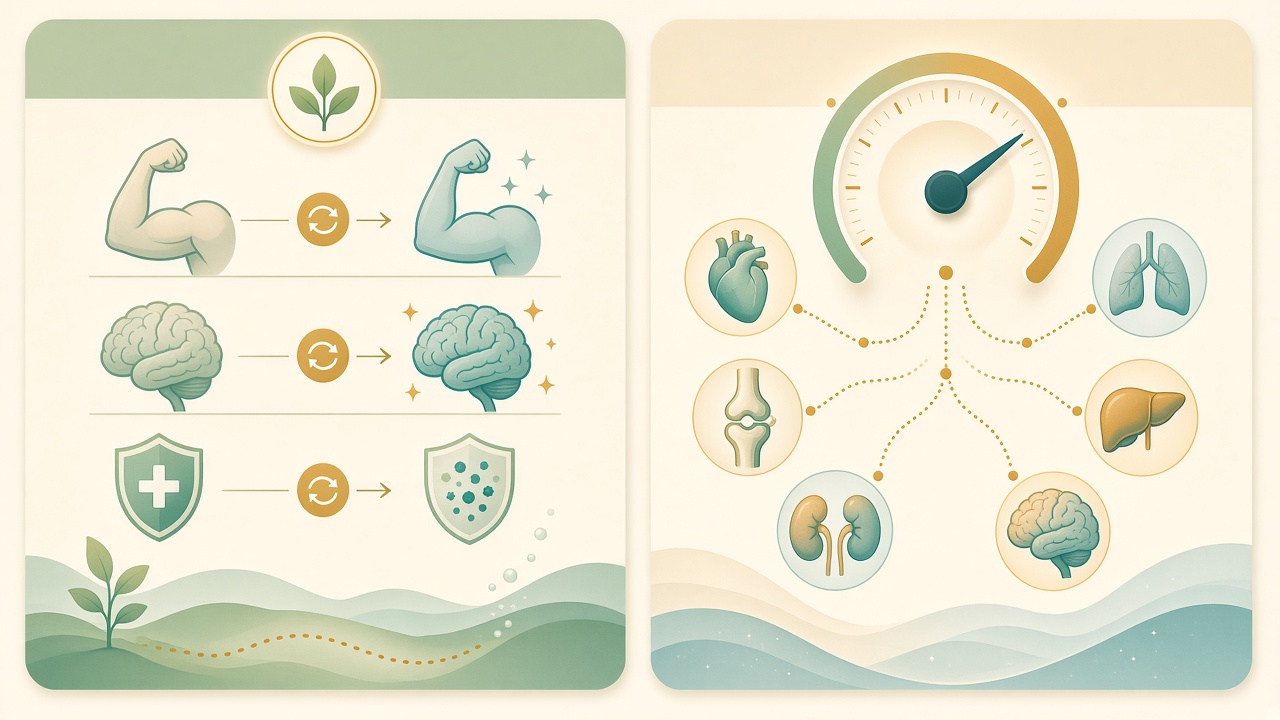
XPRIZE already runs a major contest, Healthspan, that asks: can you give older adults back about ten years of muscle, thinking, and immune function in a year or less? That is a restoration prize. It asks whether you can make people work better. It does not ask where the age signal comes from.
A team could win Healthspan with a good drug and still never learn what was keeping the whole body on the same clock. This second idea — Synchrony — is the missing question: can you find and control that shared signal?
What “winning” would mean
Not a paper that says “the clock is in the hypothalamus.” Winning would be an experiment another lab could try to repeat. In animals, something like:
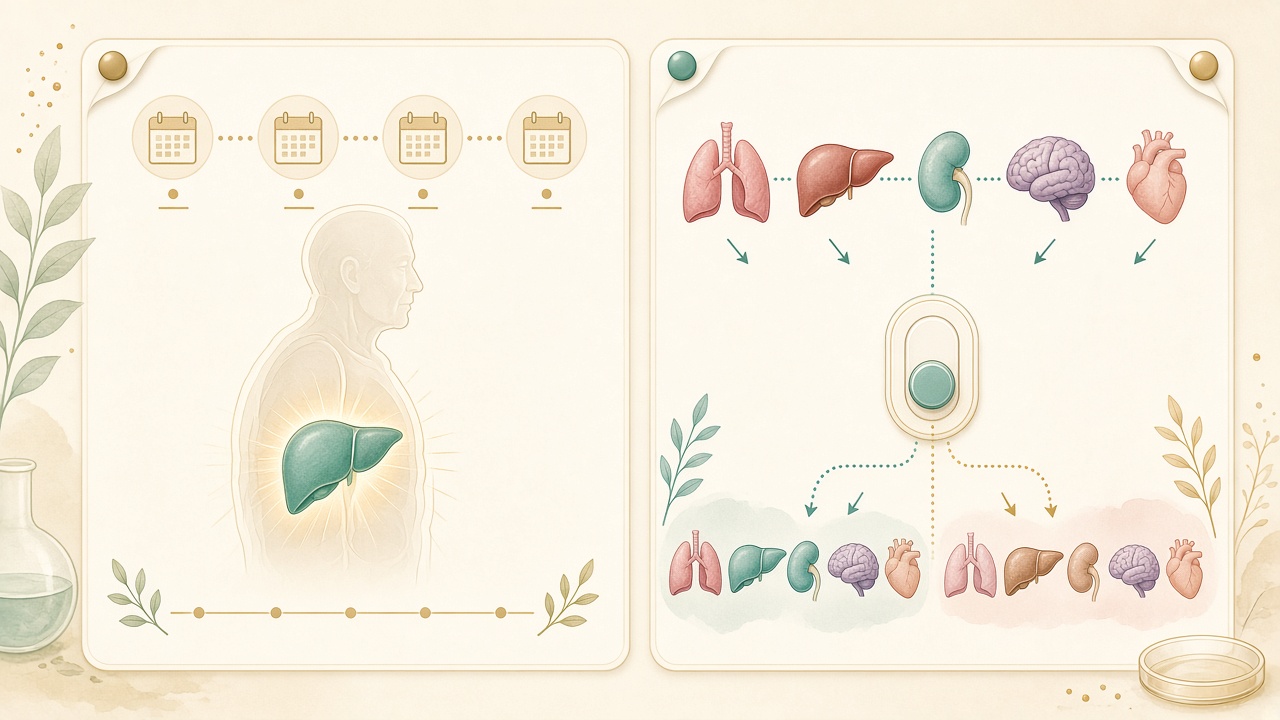
- Put a young organ into an old body and keep it young for months — the opposite of what happens now.
- Or poke one specific part of the system (a brain circuit, a type of immune cell, or a defined set of factors in the blood) and watch several organs get younger or older together.
- Or deliberately make two tissues in the same animal age at different rates, on purpose, by hitting one defined switch.
There is also a stress test using those premature-aging diseases: if you think you found the shared signal, try it in an animal whose tissues are already broken in that way. If the signal still works, the broadcast is stronger than the local damage. If it does not, you have found the limit of the broadcast. Both answers are useful.
Whole-body “reset” tricks, crash diets, or a drug that helps one organ and ignores the rest would not count. The point is control of the shared schedule, not another general anti-aging treatment.
Why a prize
Companies fund products. Universities fund papers. A prize is for a question that is important, measurable, and unlikely to get funded until someone is paid to force an answer. If the shared signal is real and controllable, almost every later longevity treatment gets cheaper and more targeted. If it is not, the field should stop talking as if it is.
Healthspan asks: can we give people a decade back?
This asks: can we find the thing that took the decade in the first place?
That is the whole proposal.