
By Lena Hart
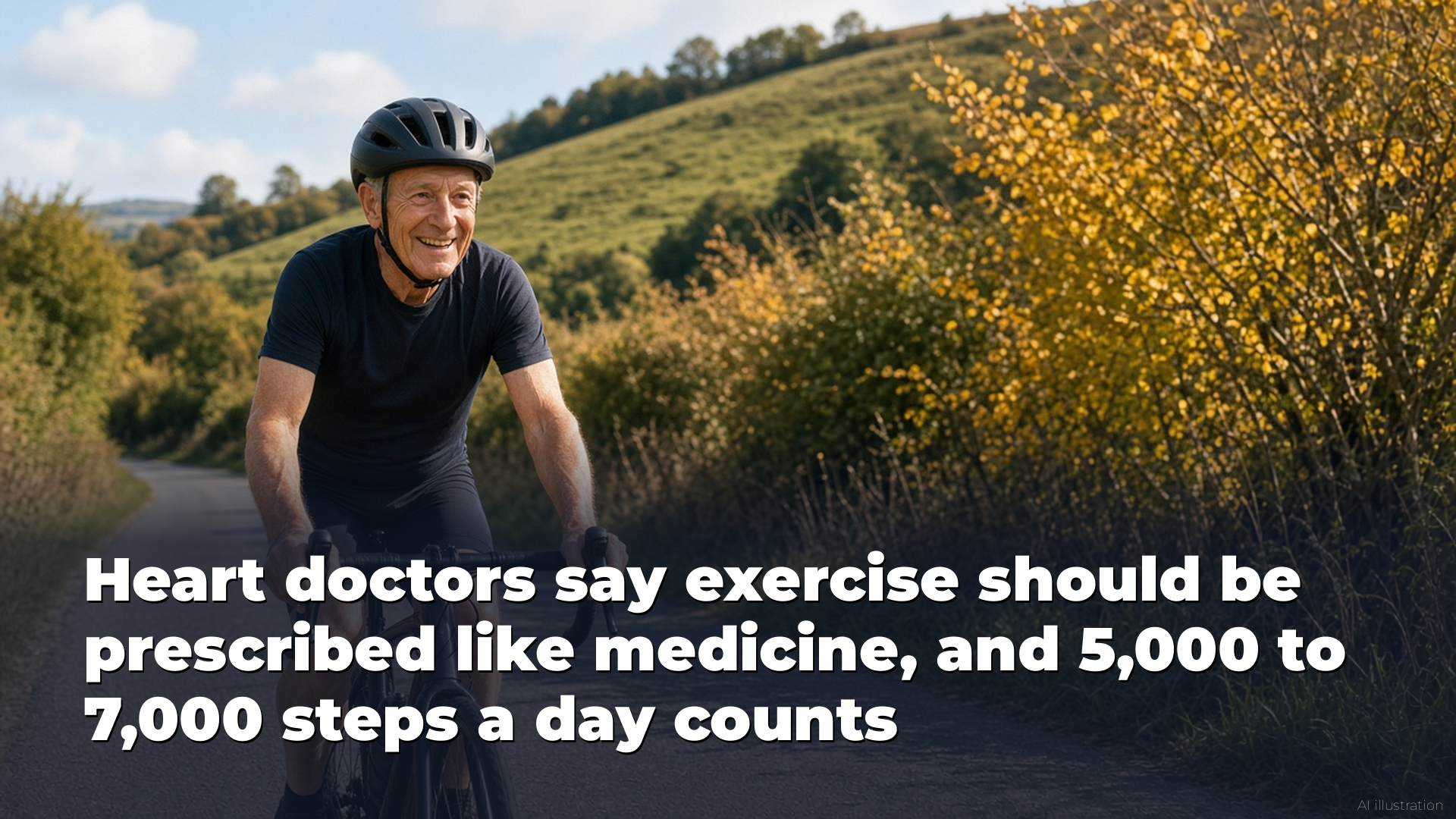
One of the best medicines for your heart costs nothing and comes with no pill bottle. A leading group of heart doctors now says exercise should be prescribed like medicine, and the bar is lower than many people think.
Meet Norman Lazarus. He took up cycling in his 50s, turns 91 in December, and was recently the oldest rider to finish the 55-mile (about 89 km) London to Brighton ride. It took him about six and a half hours.
The news. On October 15, the American College of Cardiology (ACC) released a scientific statement, published in its Journal of the American College of Cardiology (JACC), saying exercise should be a core part of routine heart care.
What the heart doctors say
Starting matters most. The biggest gains come when people who are inactive start moving.
You don't need 10,000 steps. About 5,000 to 7,000 steps a day is linked to a lower risk of dying from heart disease and other causes for many adults.
Add some strength. For most adults, strength (resistance) training should go along with aerobic exercise like walking or cycling.
No test needed for most. People with no symptoms, or whose heart condition is stable, usually do not need an exercise test before they start.
The key line. "The most important message is that some activity is better than none," said Jonathan Myers, who chaired the writing group. "Patients do not need to become athletes to improve their cardiovascular health."
The cyclists who kept going
Nine years of riding. The same day, King's College London described a study in the journal GeroScience, published online in late September. It followed 82 healthy, very active older cyclists for nine years; at follow-up they were 64 to 86. Lazarus, an emeritus professor at King's, co-founded the research with Professor Stephen Harridge and is one of the riders.
Ageing, but well. Cycling did not stop them getting older: fitness dropped by about a fifth, and they lost some muscle and gained some fat. But they kept good fitness, metabolism, thinking, sleep and mental health for their age, and 35 of the 82 had no disease after nine years. Almost all who did the fitness test were in the top 10% for people their age.
Think of your body like a car that is driven gently every day. It still gets older, but it tends to run better than one left in the garage.
Ink, not pencil: the ACC statement sums up existing research rather than testing anything new, and the cycling study is small, with no inactive group to compare against and only the riders who came back.
Why regular people should care
You do not need a gym membership or a race to sign up for. "Any exercise is generally good exercise," Harridge says, and the best one is usually the one you enjoy and keep doing. Lazarus finds hills harder now, and his advice is to adjust how much and how hard you exercise as your body changes, rather than stop. That is good news for anyone who thinks they have left it too late.
What's next
Ask your doctor. The ACC wants doctors to talk about exercise as routinely as other treatments, and to write simple, personal plans. You can start before that visit: pick one short walk you can do every day this week, and build from there.