
By Lena Hart
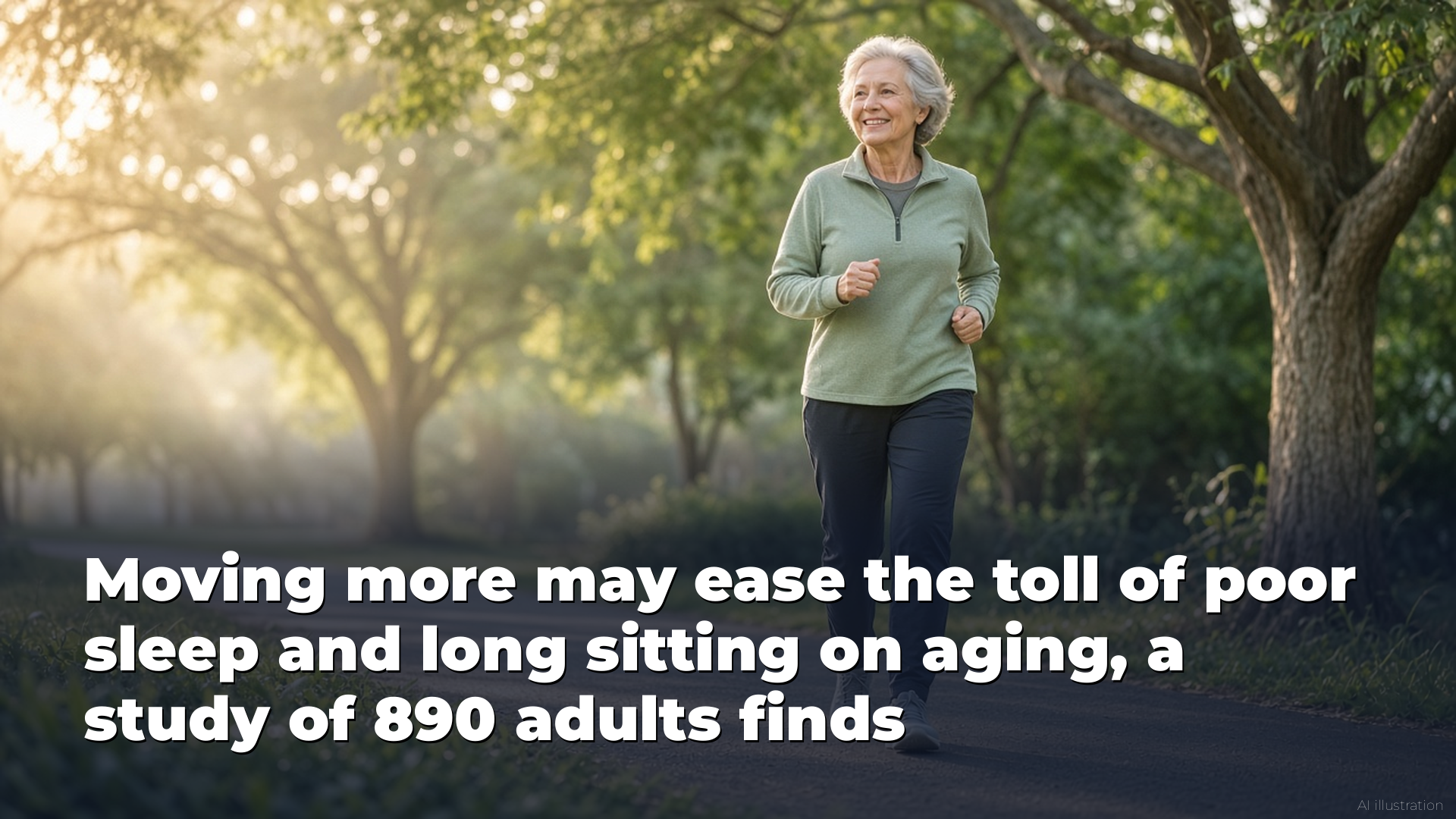
Some nights, sleep just does not come. Some days, work keeps you in a chair for hours. You cannot always fix either one. A new study offers an encouraging idea. Moving more may soften some of what those habits do to your body.
The news. A team led by Jérémy Raffin at IHU HealthAge in Toulouse, France, published the study on October 17 in the journal GeroScience. It looked at 890 adults aged 20 to 102 from a local research group called INSPIRE-T. Scienmag covered it the same day.
What is an aging clock?
Your birthday counts years, the way a car's odometer counts miles. An aging clock is more like checking the tires for wear. It uses a blood sample to estimate how fast your body is aging on the inside. Two people born the same year can get quite different results.
Each person in the study had at least one of five aging clocks measured. People also filled in questionnaires. They said how active they were, how long they sat each day and how well they slept.
What the team found
Habits on their own. Looked at one by one, the habits showed only a small link. In women, more activity went with a younger result on one clock.
Habits together. The bigger story came when the team looked at how the habits work together.
- Bad sleep, more movement. In older adults, poor sleep went with faster aging on the clocks. But in people who were more active, that link was weaker on four of the five clocks.
- Long sitting, more movement. Across the whole group, and in men, long hours of sitting went with an older result on one clock. With more activity, that link was weaker, or even reversed. This was clearest in people who slept well.
- A good balance. In older adults, a good mix of activity and sitting time also softened the link between poor sleep and faster aging on two clocks.
The authors say their findings support moving more and sitting less, or finding a good balance of both. They also urge getting the best sleep you can.
Why regular people should care
This is a hopeful message, especially for older adults with restless nights or a desk job. Good sleep still matters. But on the nights you cannot fix, your daytime habits may still be on your side.
The steps are free and familiar:
- Protect your sleep where you can.
- Move most days. Walking counts.
- Break up long sitting. Stand, stretch or take a short walk.
None of this needs a lab test or a supplement. It is the kind of change you can start on your lunch break today.
Ink, not pencil: The study is cross-sectional, a one-time snapshot, so it shows links and can't prove that moving more causes slower aging.
What's next
More to learn. The INSPIRE-T group is a large research platform in Toulouse, so more studies like this can follow. In the meantime, the message is simple and encouraging. Sleep as well as you can, move more and sit less.