By Lena Hart
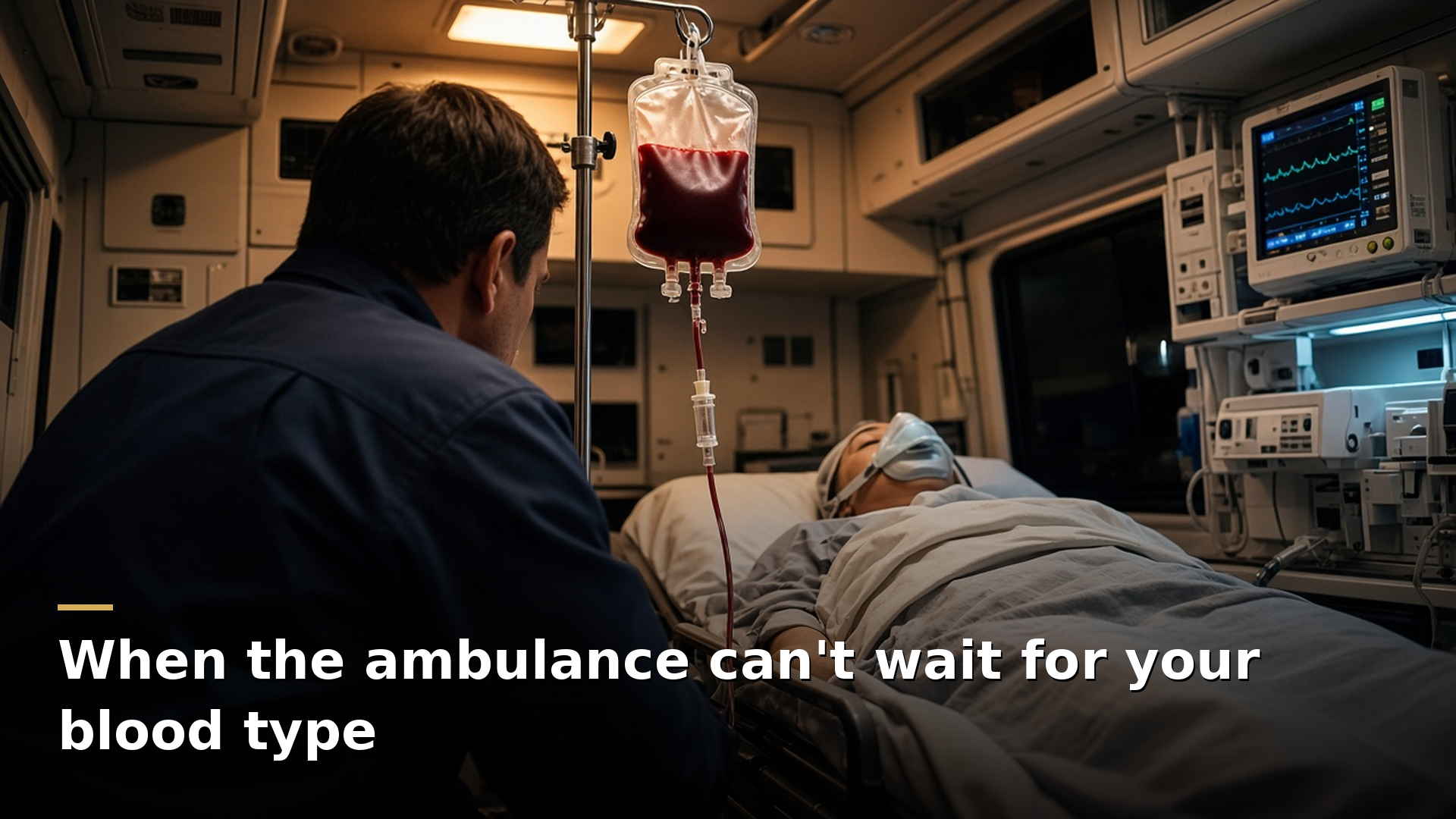
Picture a car crash at 2 a.m. on a mountain road. Someone is bleeding, and every minute counts — but the ambulance does not know your blood type, and the nearest fridge full of matched donor bags is an hour away. That gap between “needs oxygen now” and “compatible blood arrives” is the quiet panic this Japanese project is trying to shrink.
Tiny bags of oxygen, without the labels. Professor Hiromi Sakai and colleagues (work tied to Nara Medical University and Waseda University) are building an artificial red-blood-cell stand-in. They take hemoglobin — the protein that carries oxygen — from expired donated blood, clean it, and pack it inside tiny synthetic fat bubbles called lipid capsules (hemoglobin vesicles, or HbV). Because the original red-cell skin is gone, so are the markers that make you type A, B, AB, or O. The idea is a product that can carry oxygen without a blood-type match.
Why that matters in a living room, not just a lab. Regular donated blood needs careful matching, a cold fridge, and usually lasts about six weeks. Researchers say these vesicles are being developed to last up to about two years at room temperature. Think of it less like fresh milk that spoils if the power goes out, and more like a sealed first-aid kit you can keep in the trunk — if later trials keep proving it works.
What the early human tests show so far. This is still early-stage safety research in healthy volunteers, not a green light for emergency wards. A prior first-in-human study looked at smaller doses. A follow-on Phase 1b study (an early safety step that raises the dose after the first human tests) at Nara Medical University Hospital was designed for 16 healthy adults, with doses stepping up toward 400 milliliters. Public updates have reported no serious adverse reactions in the early dose groups already finished — promising, and still preliminary. Infusion reactions can happen with this kind of product; the study plan even included medicine beforehand to cut fever and rash risk. Success here means “looks tolerable so far,” not “ready for the crash-site cooler.”
Where it could change a Tuesday for ordinary people. If future trials confirm both safety and real oxygen delivery in bleeding patients, the first winners may not be big-city hospitals with blood banks downstairs. They may be ambulances, disaster teams, remote clinics, and military medics who today often wait for typed, refrigerated bags. Japan’s aging population and shrinking donor pool make the pressure local and personal: fewer young donors, more older patients who need blood. Exact shortage forecasts vary by source; the direction of the problem does not.
Ink, not pencil: this is an experimental oxygen carrier in clinical testing — not approved universal blood on pharmacy shelves. Shelf-life and “no fridge” claims come from the research program’s design goals and earlier lab work; they are not a guarantee of a finished, licensed product. Watch for larger trials in real bleeding emergencies before treating this as everyday medicine.
Why regular people should care
The Monday stake is simple: when someone you love is bleeding, time and matching become the difference between a chance and a wait. A shelf-stable, type-free oxygen carrier would not replace every transfusion — but it could buy the minutes that refrigerators and typing trays cannot.
What's next
More safety and effectiveness data in patients who actually need blood, then the long regulatory road. Until then, the honest headline is hope with a seatbelt: a clever reuse of expired donor hemoglobin, early human safety signals, and a problem every aging country knows in its bones.