
By Lena Hart
Two cars can both show 150,000 kilometres on the clock. One runs like new. The other rattles at every stop. The number on the dashboard does not tell you everything.
Our brains may work the same way. Your birthday says how old you are. A new study suggests a brain scan can say something about how old your brain looks, and that the difference may matter for memory years later.
That is hopeful news for healthspan, the years we spend healthy and sharp. Some brains look younger than the calendar says. And if a routine scan can one day spot a brain that is aging faster, there may be time to help it, years before memory slips.
What the scientists did
The study was led by Sigfus Kristinsson and colleagues at the University of South Carolina, working with the Icelandic Heart Association. It was published in the journal GeroScience on October 22.
They used the AGES-Reykjavik Study, a long-running study of older people living in Reykjavik, Iceland. The scans and memory tests were done between 2002 and 2011, and the team analysed them now.
The researchers looked at 4,606 older adults who were thinking clearly at the start. Their average age was 76, and 58% were women.
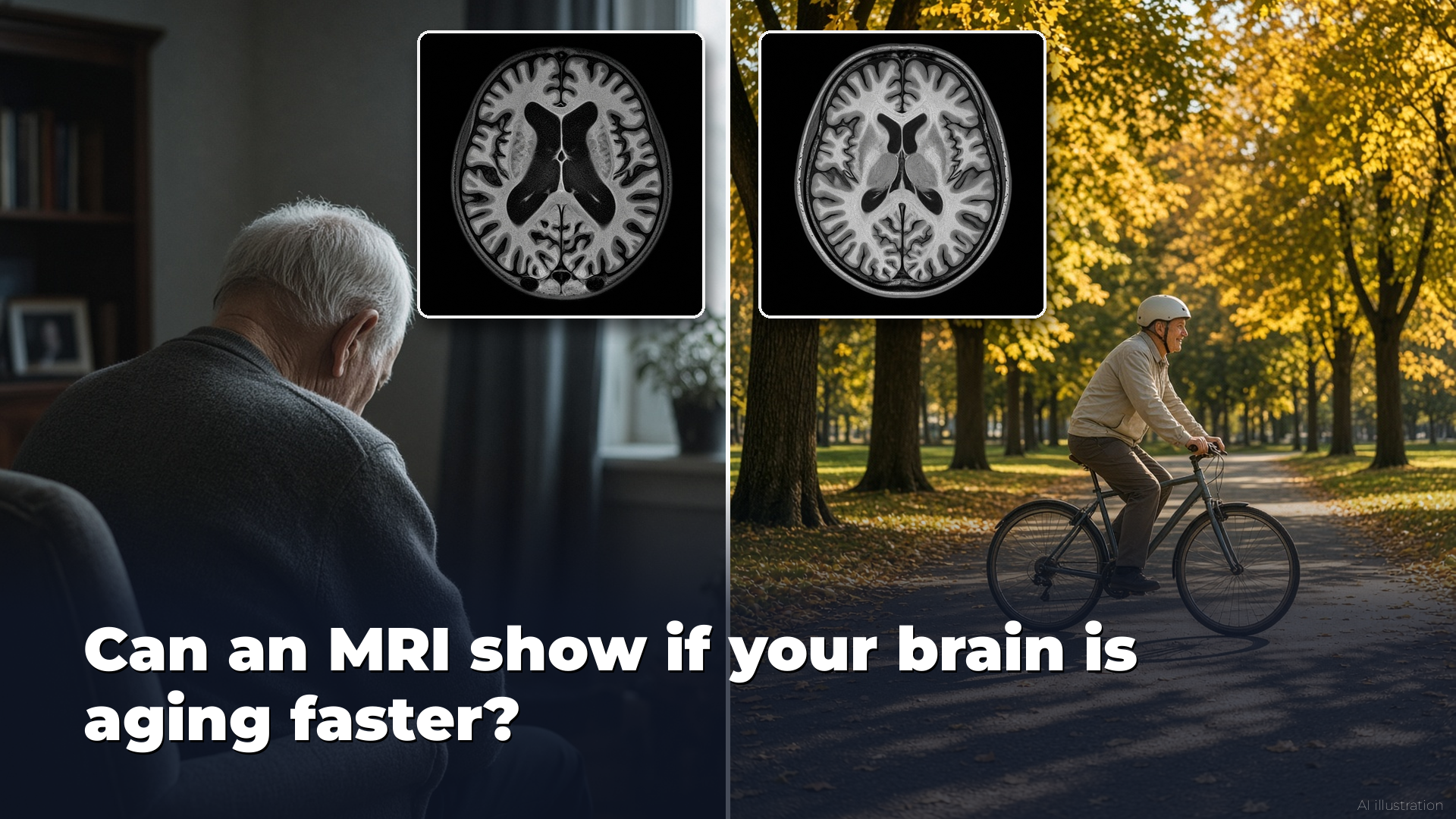
Each person had an MRI (magnetic resonance imaging) scan, the same kind of brain scan many hospitals use. A computer program estimated each brain's age from its shape and size. The team then compared that "brain age" with the person's real age. The difference is called the brain age gap.
What they found
People whose brains looked older than their real age scored lower on tests of memory, thinking speed and planning. This held true even after the researchers allowed for age, sex and years of schooling.
Then came the bigger question. About five years later, 2,561 of the volunteers took the tests again. Most people's scores dropped a little, which is normal with age. But those with a bigger brain age gap at the start showed a faster drop in memory.
For thinking speed and planning, the main results did not show a clearly faster decline. A smaller follow-up analysis hinted at a faster drop in planning skills for older-looking brains.
The authors call the brain age gap a possible early warning sign for brain health in people who seem healthy. They say it could help doctors find people who might benefit from earlier help.
One honest caveat: this shows a link, not a cause; the memory result only just passed the usual statistical test, it comes from one fairly similar group of older Icelanders, and it is not a test anyone can buy or use to predict one person's memory.
Why regular people should care
Memory loss is one of the things people fear most about getting older. This study adds to a hopeful idea: brain aging is not one fixed speed for everyone. In this group, many brains actually looked younger than their owners' real age.
The authors point to things that might help, which they want to test next: physical activity, heart and blood-vessel health, and brain training. None of those has been shown to change "brain age" yet. Finding out is the next step.
What's next
The researchers want longer studies to see whether an older-looking brain predicts mild memory problems or dementia later on. They also want to test whether exercise, heart health and brain training can slow down brain age. If they can, a routine scan might one day become an early nudge to protect your memory, not just a picture of it.