
By Casey Forge
Warehouse robots that walk like people only scale if workers can stand next to them without a cage. On October 1, Agility Robotics and FORT Robotics signed a memorandum of understanding to deepen a three-part safety architecture for Digit 5 — Agility’s next-generation humanoid built for what the companies call cooperatively safe work at scale.
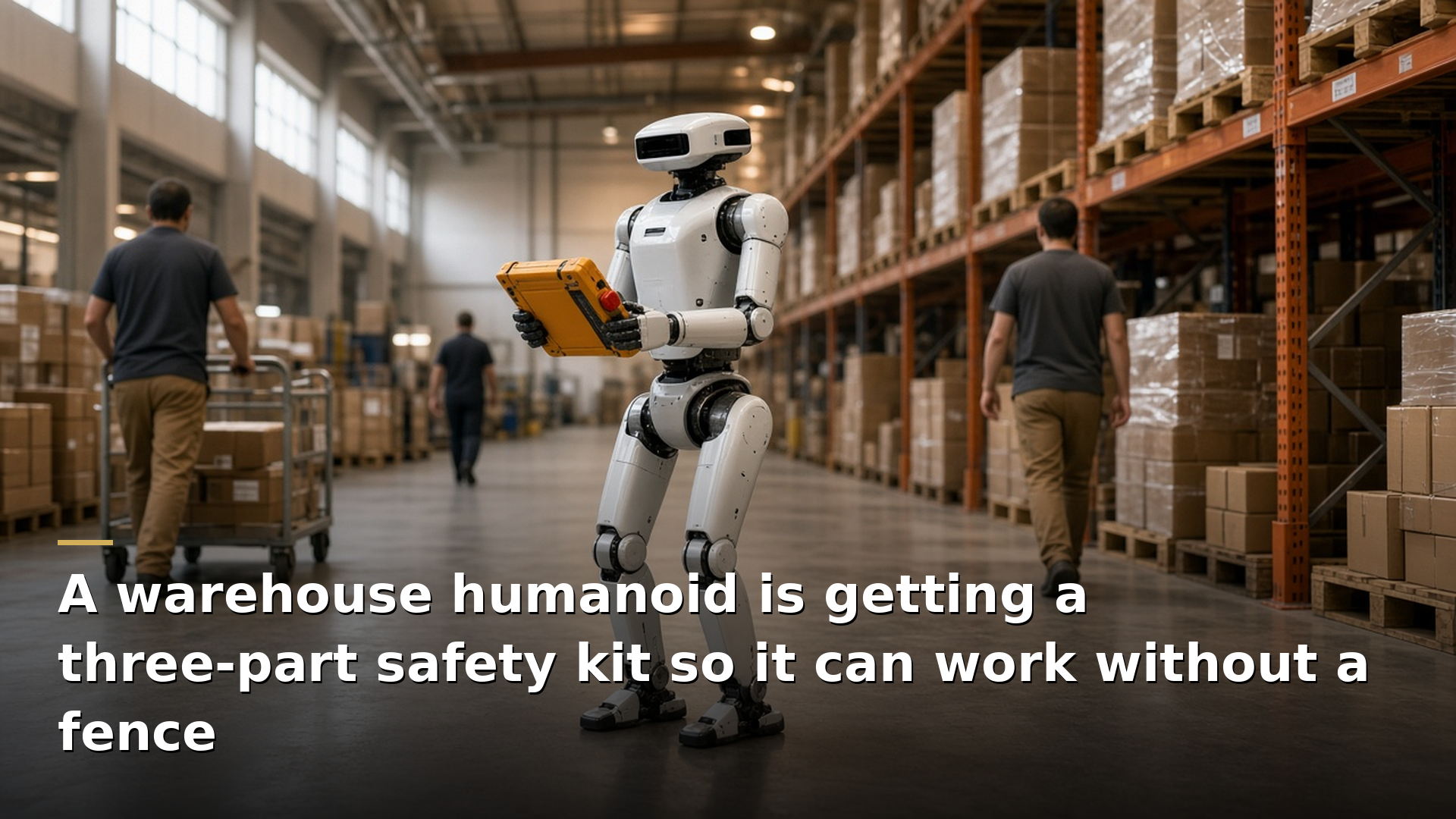
Three layers, not one big red button. The stack is a safety pendant with redundant manual override, on-robot communications, and off-robot interfaces that connect the robot to external facility safety systems. The off-robot piece — jointly developed and described as an Offboard Safety Bridge — is meant to extend safety beyond the machine itself into the environment around it.
From parts supplier to operating partner. Agility has used FORT technology on earlier Digit versions and earlier this year asked FORT for a pendant sled: a custom tablet holder with emergency-stop and enabling-device functions. Like Digit 4, Digit 5 is expected to run autonomously in normal work; the pendant is for monitoring and override during setup, maintenance, or surprises. The MOU also covers joint hardware development, solutions engineering, regulatory compliance, and deployment support as deployments get more complex.
Hours already on the floor. Digit’s predecessors have logged more than 65,000 hours of operation at customer sites including Schaeffler, GXO, and Toyota Motor Manufacturing Canada. Digit 5’s planned onboard safety architecture spans safe human detection, safety cues, and safe motion control; FORT’s offboard layer is meant to complete that envelope.
Ink, not pencil: this is a memorandum of understanding expanding a multi-year partnership — not a product-launch day with a general-availability date for Digit 5. Definitive agreements and deployment timing still have to follow. Treat “cooperatively safe” as the companies’ engineering goal for fence-free work, not a certified claim that every site is ready tomorrow.
Why regular people should care
The Monday stake is whether humanoids leave the cage. If a walking robot can share a warehouse aisle safely — with overrides on the robot and hooks into the building’s own safety gear — more sites can automate without walling off whole zones. That is how labor shortages and heavy repetitive work get real options, not demos behind glass.
What's next
Watch for definitive commercial agreements, Digit 5 deployment milestones, and how the offboard bridge behaves in live warehouses. For now, the useful fact is the architecture: pendant, on-robot comms, and facility interfaces — the trust layer the companies say fence-free humanoid work needs.