
By Casey Forge
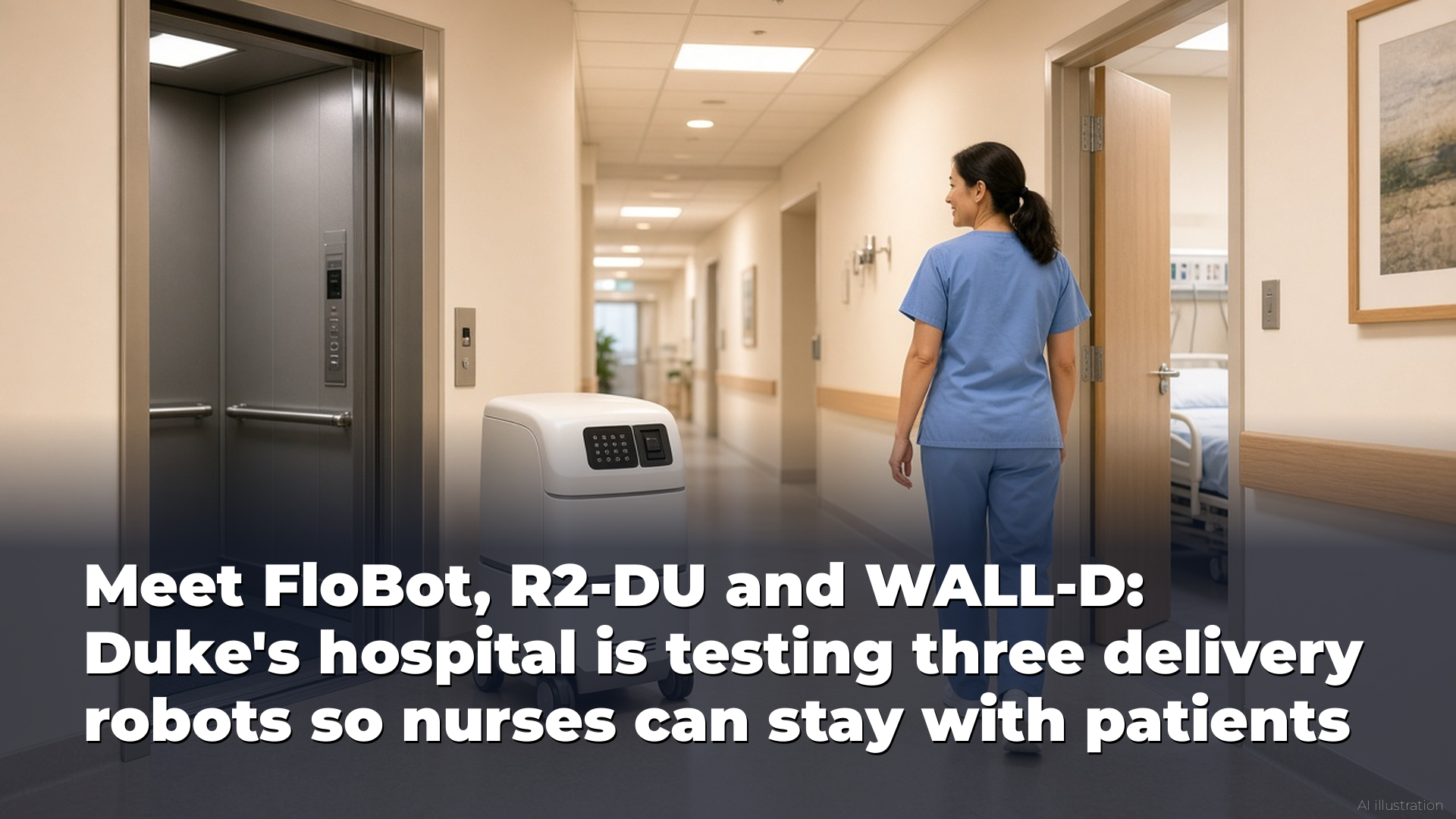
If you have ever pressed the call button in a hospital bed, you know the wait can feel long. Sometimes the nurse is busy with another patient. Sometimes they are walking a long way to fetch something. A hospital in North Carolina is now testing robots to take on some of that walking.
The news. Duke Health has three delivery robots at work in its hospital in Durham, North Carolina. They are autonomous, which means they move around on their own. Their names are FloBot, R2-DU and WALL-D. WUNC News reported on October 16 that they are part of a pilot program. The goal is to move supplies while staff focus on patients.
How it works
Three robots, one big campus. The robots carry supplies and medicines around Duke University Hospital. Duke's staff newsletter says they came through the Duke Care Innovation Collaborative. The hospital campus is "massive," said Chantal Howard, Duke Health's chief nursing and patient care services officer.
Locked compartments. Each robot has three secure compartments. Staff scan their badges on the robot to open them. That matters for medicines, which need to reach the right hands.
Doors and elevators. Duke Health officials said the robots can open doors, ride the elevators and push the floor buttons. They can also interact with people.
Picture a parcel locker, the kind you might use to pick up an online order. Now picture it rolling down the hallway and riding the elevator to your floor. That is roughly the idea.
Why regular people should care
The human stake here is time. Howard said the robots help team members stay where they work, "whether it's at the bedside for the nurses rather than looking for supplies." She said the same goes for supply teams bringing items to units, and for pharmacy bringing medicines to the bedside.
For a patient, or a family member sitting by a hospital bed, that is the part that counts. Every trip a nurse does not have to make is time that could go to checking on someone, answering a question or simply being in the room.
This is also a gentle kind of robot story. These machines do not look like people. They do one plain job, fetching and carrying, so the people with medical skills can do theirs.
"We're in the process of expanding and redesigning models of care so that we can make things easier for our team members by leveraging technology to facilitate processes that we currently do each and every day," Howard said.
Ink, not pencil: This is a pilot of three robots. Duke has not said how long it will run or how much time the robots save.
What's next
Watching the pilot. WUNC reported that it is unclear how long the robots will be used at Duke Health. The useful questions for any hospital trying this are simple. Do nurses actually get time back? Do medicines arrive safely and on time? Do patients notice the difference? If Duke shares results, we will report them. Until then, if you visit and see a robot waiting for the elevator, let it on.