
By Casey Forge
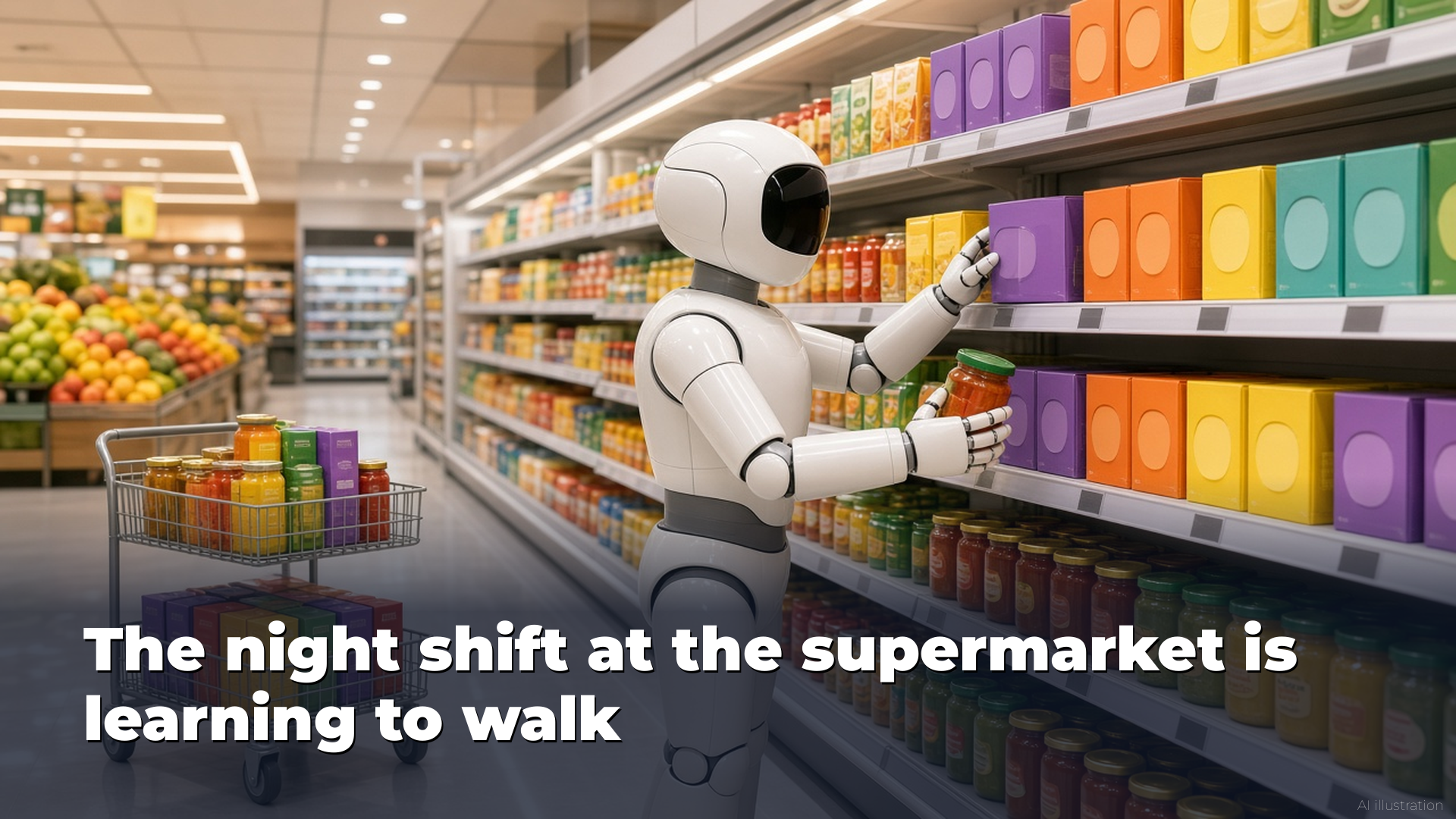
Somewhere near Copenhagen, after the lights dim and the last shopper leaves, a robot is learning how to hold a box of cereal. It is slow, it needs a human guide, and it might change what your grocery clerk does all day.
Think about the last time you asked a store worker where something was. Chances are they were kneeling by a pallet, stacking cans. That is the job these robots are being trained to take.
What is happening. At a Føtex supermarket near Copenhagen, humanoid robots are practising how to pick up products and put them on shelves, Euronews reported on October 11. The robots come from Danish start-up HIVE Robots and are built by China's Unitree. They have been training since June.
Føtex is part of a giant. Its parent, Salling Group, is Denmark's largest retailer, with more than 2,000 stores in six European countries, according to Euronews.
Why shelves, of all things
Restocking eats the day. According to Føtex, workers spend between 40 and 50 per cent of their time refilling shelves. That is a big slice of a shift spent lifting, bending and repeating the same motion for hours.
The store's hope, Euronews reports, is that robots take on some of this repetitive physical work, so people get more time to help customers. It is a bit like a dishwasher at home. It does not cook dinner, but it gives you back the twenty minutes after.
Why a human shape? It sounds like science fiction, but the reason is practical. "Grocery stores and supermarkets are designed to function optimally for customers moving around the store," Simon Kudsk, operations director at Føtex, said in a HIVE announcement in March. Big factory robots don't fit in narrow aisles. A robot shaped like a person can use the same spaces a person uses.
Not a new deal, but a real test
The partnership started in March. HIVE and Føtex announced a multi-year co-innovation partnership on March 11, 2026, and said the first pilots would run at night. The October video is a fresh look at the training now under way, not a brand-new agreement.
People are still in charge. For now, human operators guide every movement, Euronews says, helping the artificial intelligence (AI) learn how to handle different products. The robots still work more slowly than people and need close supervision.
The goal is for them to restock shelves on their own by early 2027, mainly at night when the store is closed. Later, they might check expiry dates, find empty shelves and spot misplaced goods.
The safety line: no shoppers in the room
This is the part that matters most. Danish law would have to change before robots could work on their own among shoppers, according to Euronews. So for now, the work stays at night and away from customers.
That is not a weakness of the plan. It is the plan. HIVE said in March that night pilots let the robots "operate in a controlled and safe environment." A closed store is a safe classroom. A busy Saturday aisle, with children and trolleys, is a much harder test.
Ink, not pencil: early 2027 is a goal, not a promise. Robots that learn in a quiet store may struggle with the messy real world, and the law that keeps them away from shoppers has not changed.
HIVE's long-term vision is bigger. It says every store could one day have three to five humanoid robots working around the clock, supervised by staff. That is a company's hope, not a result yet.
Why regular people should care
Machines are moving into places you already know. The supermarket is not a factory. It is where you buy milk on a Tuesday. If robots take over the heavy, boring lifting at night, the person in the aisle by day may have more time to answer your question. The open questions are fair ones, too. Will stores use the saved hours for better service, or for fewer staff? The trial does not answer that yet. And the rule that keeps robots out while people shop is a reminder that safety should come first, not last.
What's next
Watch early 2027. That is when Føtex and HIVE hope the robots can restock on their own at night. Watch, too, whether Denmark moves to change the rules about robots working near shoppers. Until then, the newest worker at the supermarket only clocks in after you have gone home.