
By Casey Forge
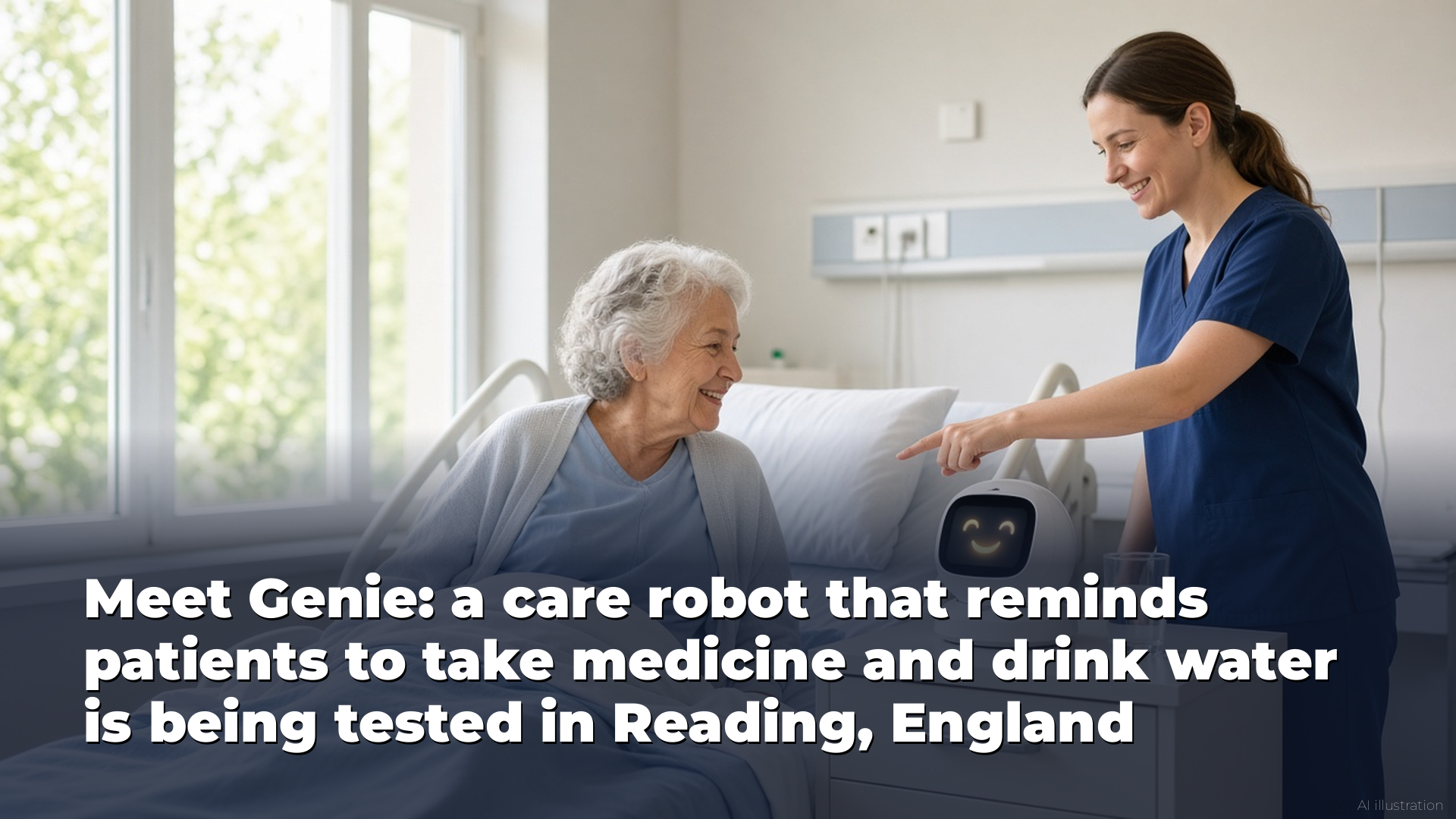
Picture someone coming home after a hospital stay. There are new pills to take, glasses of water to remember and appointments to keep.
Family call when they can. A carer visits. But a lot of hours in the day are spent alone.
In Reading, England, researchers are trying out a small helper for times like these. It is a care robot called Genie.
The news. Researchers presented Genie to Reading Borough Council's Older People's Working Group on Friday, October 16, the Local Democracy Reporting Service reported on October 19. B Radio also covered it.
Genie was made by Service Robotics in Bristol and tested at the Royal Berkshire Hospital. It is still experimental.
How it works
Reminders and check-ins. Genie gives medicine reminders, reminders to drink water, appointment alerts and daily mood check-ins. It is meant as a companion for people who are ill in a hospital, a rehabilitation centre or a care home.
Calls and entertainment. It can also handle phone and video calls, and play radio, YouTube and Netflix. The researchers told councillors it can plug into a TV with an HDMI cable for a bigger screen.
Real-world limits. "Genie needs to be charged and connected to WiFi," said Dr Echo Feng. "That is a little bit of a restriction, but the technology develops every day."
Think of the sticky notes on a fridge, a radio and a video-call tablet, rolled into one device that speaks up at the right time. That is roughly the idea.
Why regular people should care
The trial is guided by Dr Rodrigo Perez-Vega and Dr Echo Feng, from the Consumer Futures Lab at the University of Reading's Henley Business School. They have run pilot uses and asked care staff what they think.
"In a survey of 79 staff on elderly care wards, 62 per cent saw a role for robots on dementia wards," Dr Perez-Vega said. That is a survey of staff opinions, not a result for patients.
"With the council, they've visited over 50s at community centres in Whitley Wood and Southcote," he added. "The university is working with robotic engineers to help deploy them and build familiarity."
Staff were honest about their worries, too. Survey respondents raised concerns about scams and privacy.
Councillor Paul Gittings welcomed the idea. Reading has a "home first" policy to help people settle back at home after a hospital stay. "I see this as a 'super Alexa' service," he said. "This has got some potential, it's a glimpse into the future." He called for more trials.
The hopeful part: a helper like this could fill gaps between visits with reminders and a familiar face on a video call. Service Robotics says on its website that Genie is designed to support human carers, not replace them.
Ink, not pencil: Genie is a trial, not ready for routine use. The researchers say it needs more testing with other hospitals and councils first. No results for patients' health have been reported.
What's next
More trials. The council wants more trials, and the researchers say wider testing must come first. The working group meets next on Friday, February 5, 2027.
Good questions to watch: Do people actually use it? Does it keep their information safe? And do patients and carers say it helps?