
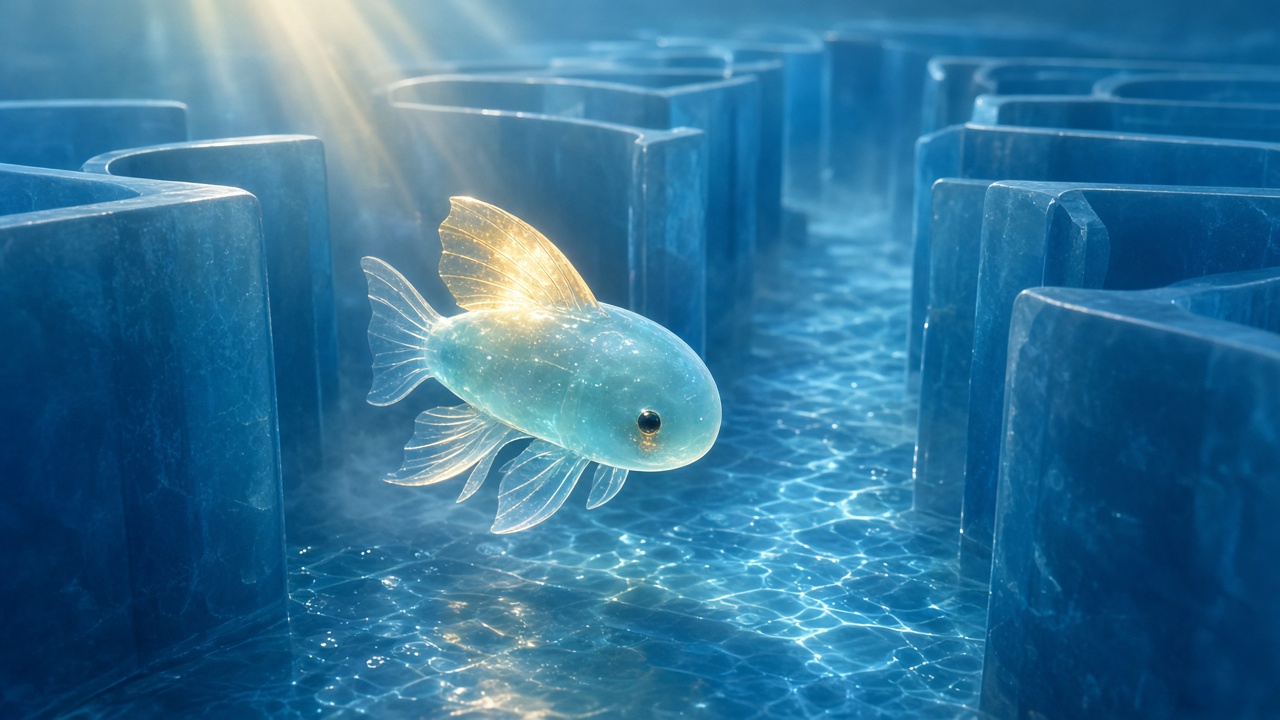
Picture a soft robot about the size of a stick of gum, flapping through a dish of water because living muscle cells—not motors—are doing the work. That is the wonder MIT engineers just put on the table.
In research covered by MIT News on September 29 and first published online September 28 in Advanced Functional Materials, Ritu Raman’s lab describes a paper-thin “aquabot.” Its gel skeleton is roughly gum-stick length and width; each half acts as a fin. A monolayer of skeletal muscle cells—much thinner than a human hair—coats those fins and is genetically engineered to twitch when light hits. Flash one fin and it flaps hard enough to pull the bot forward; alternate the light and you steer. The team swam the untethered robot through a simple watery maze.
Speed is modest—about four body lengths per minute at its fastest, closer to a leisurely cow shark than a freestyle final—but the leap is thinness. Raman’s group calls it the first very thin, two-dimensional muscle-powered robot that can locomote. Typical biohybrid bots use bulky 3D muscle needing millions of cells; this design aims for cheaper, more efficient motion. The journal paper reports roughly 20-fold higher force density than typical 3D muscle actuators and untethered longevity past 30 days (about a 4,500× gain over earlier thin designs lasting under ten minutes). Funding included Office of Naval Research support.
Living actuators, Raman notes, are soft, responsive, and can heal—useful in fragile or unpredictable places where rigid hardware is a blunt tool.
Why it matters
Robots do not have to look like factory arms. A gum-stick swimmer powered by real muscle is a reminder that “machine” can mean soft, gentle, and biologically clever—closer to something that might one day inspect a reef, a pipe, or a delicate habitat without thrashing it. It is early-lab science, not a product on a shelf, but it stretches what we imagine a robot can be.
What’s next
The team’s next goal is a body design that swims faster; even at today’s pace, they sketch uses like environmental monitoring in water. Watch for more refined skeletons, tighter light control, and longer missions as biohybrid soft robots leave the petri-dish maze.
Sources: MIT News — Paper-thin muscle robot swims watery maze, Advanced Functional Materials — 2D skeletal muscle thin film actuators