
By Casey Forge
Many of us know the worry. A parent lives alone in another town. You call in the evening and wonder: did they take their pills, did they eat, are they all right?
In South Korea, where the population is ageing fast, some companies think a small, friendly robot on the kitchen table could help with that worry. This week in Seoul, they showed what their robots can do. Here is what was on show, and what a show demo can and cannot tell us.
What was on show
The robots were at Reha·Homecare 2026, a home care, rehabilitation and welfare exhibition held at the COEX centre in Seoul from October 21 to 23. The Korean newspaper Dong-A Ilbo reported that 236 Korean and foreign companies took part.
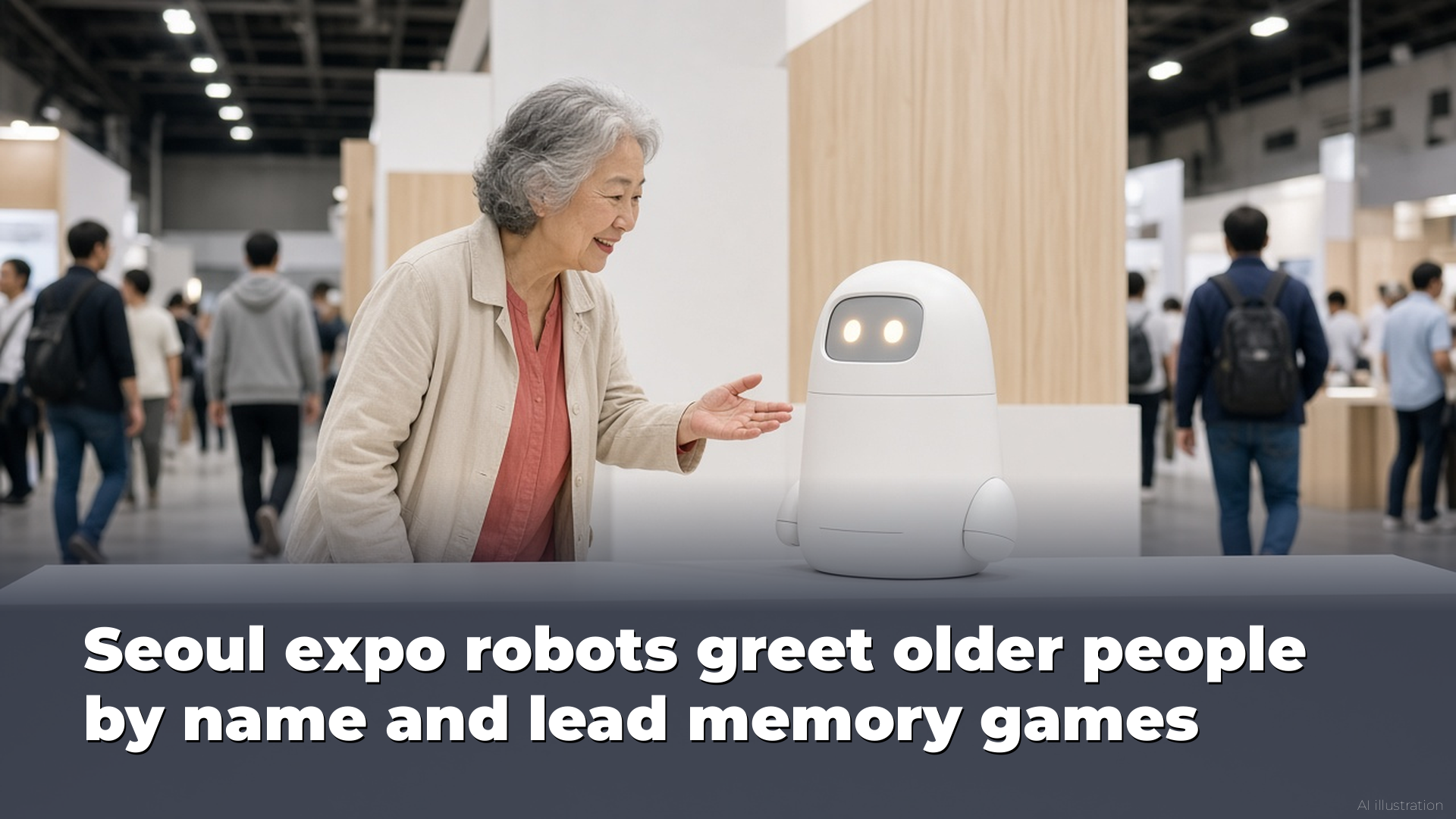
Riku, a humanoid "social robot" made by the Korean company Torooc, was one of the stars. Two separate reports, from Health Chosun and Dong-A Ilbo, describe what it did at the show:
- It recognised faces and voices and spoke to visitors first. "Nice to meet you!" it said, according to Dong-A Ilbo (our translation).
- It called users by name and gave medicine and schedule reminders, such as "It's time to take your medication," Health Chosun reported.
- It led memory games, proverb quizzes and gentle exercises.
A Torooc representative told Dong-A Ilbo that Riku offers thinking games and exercises side by side with people, "like an assistant teacher" (our translation from Korean).
Hyodol is a soft, doll-shaped care robot. Health Chosun says it chats by voice, responds when its head or hands are touched, reminds people about meals and medicine, and asks about sleep, mood and pain. According to that report, it uses sensors to notice activity and can alert a carer if no movement is detected for a set time, and carers can check through an app whether medicine was taken and send voice messages.
We could not find a second independent news report on Hyodol at this show. Its features above come from Health Chosun alone; the company describes similar features in its own exhibitor listing, but that is the company talking about itself, not an outside test.
Why Korea is paying attention
Think of a bus route where more people wait at every stop each year, but fewer drivers sign up. That is the care problem Korea is facing.
A report by the KDI (Korea Development Institute), a government-funded think tank, published in April, projects that demand for long-term care will be more than 2.4 times the 2023 level by 2043. Keeping each care worker's workload at today's level would need about 990,000 more care workers.
In a KDI survey of care homes with places for 80 or more residents, 89.1% said care robots were needed, but only 6.4% had actually brought one in. Cost was one of the main barriers. About half, 51.8%, said they would adopt robots if they got help paying.
What a show demo does not tell us
These were demonstrations and company descriptions at a trade show, not results from careful studies. The reports do not say how often the robots make mistakes or what they cost.
Ink, not pencil: these robots were shown working at a public exhibition in Seoul this week, and Korea's care worker gap is a projection from a government-funded research body. These demos do not show whether robots like these make older people healthier or safer.
There is also the question of privacy. A robot with cameras, microphones and movement sensors in someone's home collects personal information. Families should ask what is recorded and who can see it.
Why regular people should care
Almost every country is getting older. The questions Korea faces now, who will help our parents and how, will reach many of us soon. The honest hope is not a robot instead of a person, but a robot that handles the reminders so a human carer has more time for the real visit.
What's next
KDI says government support has mostly gone to robot makers and suggests it should also help the care homes and families who use them. Watch for real-world studies, with numbers, on whether these helpers make daily life easier.