
By Casey Forge
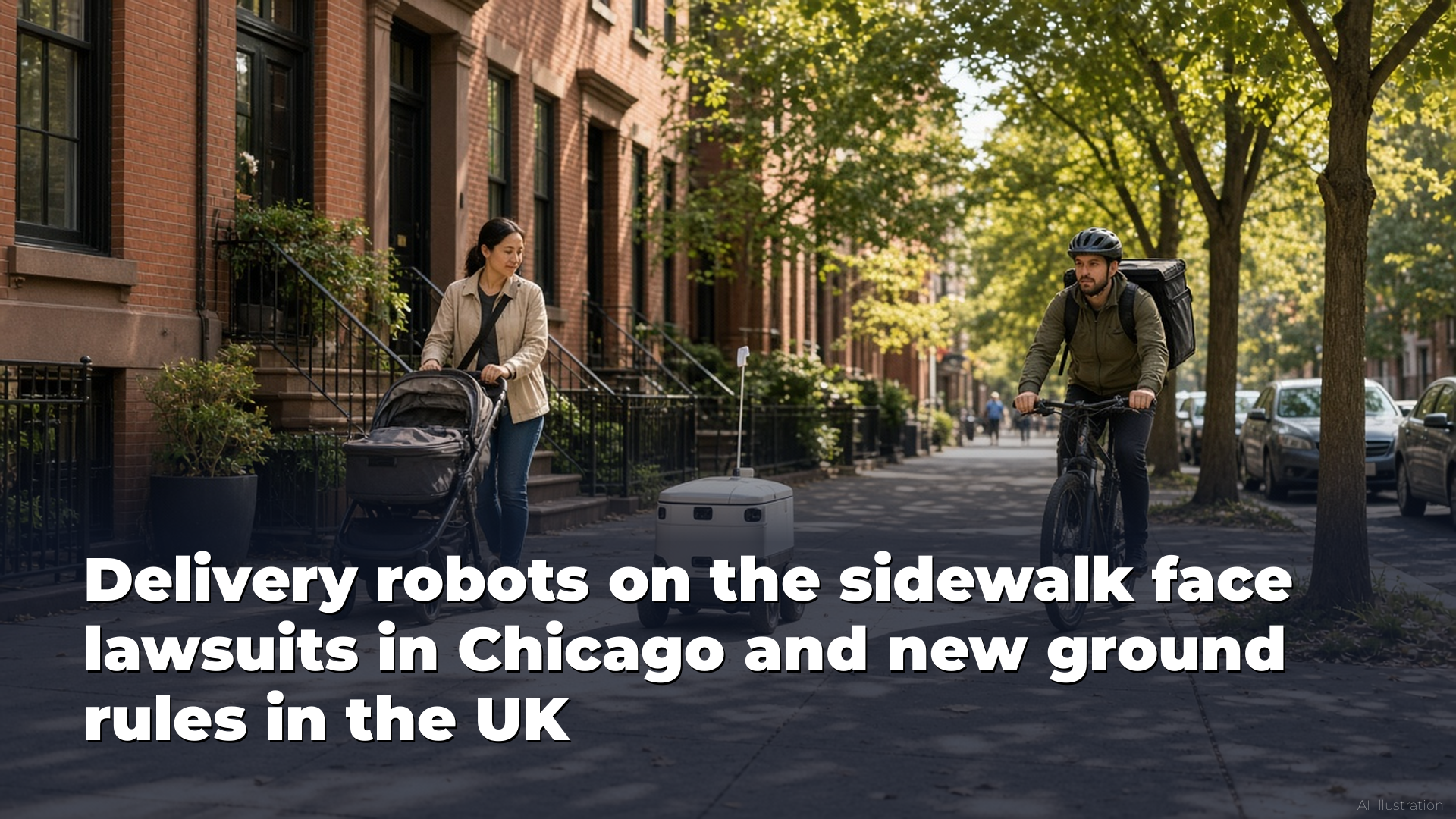
The newest neighbour on your street may be a cooler on wheels. Small delivery robots now roll along sidewalks in cities on both sides of the Atlantic, and this week people asked three plain questions about them: what do their cameras keep, who has the right of way, and what happens to the human couriers?
The news. On October 15, lawsuits in Chicago, a UK government answer and a union statement all put sidewalk robots in the spotlight.
Chicago: lawsuits over cameras
Two class actions. According to CBS News Chicago, two class-action lawsuits filed in Chicago accuse the delivery companies Coco Robotics and Serve Robotics of breaking the Illinois Biometric Information Privacy Act (BIPA). Biometric data means body details that can identify you, like your face or fingerprints. The suits say the robots' cameras collected people's facial and hand data.
Both companies deny it. A Coco spokesperson said: "This lawsuit fundamentally misunderstands our technology, we have not collected biometric data in Chicago, and we are confident that this frivolous lawsuit will go away." Serve said its robots use cameras and sensors to move safely, and that its "systems are not designed to identify individuals or create biometric profiles."
A neighbour's petition. Josh Robertson started a petition called No Sidewalk Bots, asking the city to pause its robot pilot program until rules are in place. "We've had over 4,600 Chicagoans add their name to our petition," he told CBS. He said concerns include blocked sidewalks and effects on pets and children, not only privacy. The city's pilot is set to run until May 2027 unless the City Council ends or extends it.
The UK: robots must give way
A minister's answer. In a written answer to a question from a member of Parliament, UK roads minister Justin Madders said: "Pavement robots will be required to give way to other road users and must not obstruct pedestrians," as reported by PublicTechnology.
Locks and emergency plans. He said operators must make sure only authorised users can open a robot's cargo box, and that councils and operators will need plans so robots "do not hinder emergency responders." The government is also considering rules to protect robots from hacking.
Riders want a say
New robots in London. Coco and the food delivery app Deliveroo are starting robot deliveries in London's Canary Wharf this month, then Milton Keynes, Leeds, Stockton-on-Tees and Nottingham.
The union's view. The GMB union, which represents Deliveroo couriers, pushed back. "Innovation should not come at the expense of real people, and these developments must always be negotiated with workers," organiser Claude Bahati told Retail Gazette. Deliveroo says the robots will add to its riders, who will still handle most orders.
How the robots work. The robots travel at walking pace. According to Control.com, Coco's robots slow down or stop for people, cyclists and pets, and remote human pilots take over at tricky spots like busy crossings.
Ink, not pencil: the Chicago claims are allegations that both companies deny, and CBS does not give the exact filing date. The UK points are policy for trials, not final law; the government says no permanent rules will come in without public consultation.
Why regular people should care
Think of the sidewalk as a shared hallway. Everyone needs to get through, whether they push a stroller, use a wheelchair or carry groceries. These robots are new guests in that hallway. The questions raised this week are good ones for any city: can a robot's camera identify me, will it get out of my way, and will it ever block an ambulance? It is also a fair moment to think about the couriers who still bring most of our dinners.
What's next
Courts and councils. The Chicago cases will now go through the courts, and the city must decide what happens when its pilot ends in May 2027. In the UK, trials continue as the government shapes its rules. If robots arrive on your street, your local council is a good place to ask how they are run.