
By Casey Forge
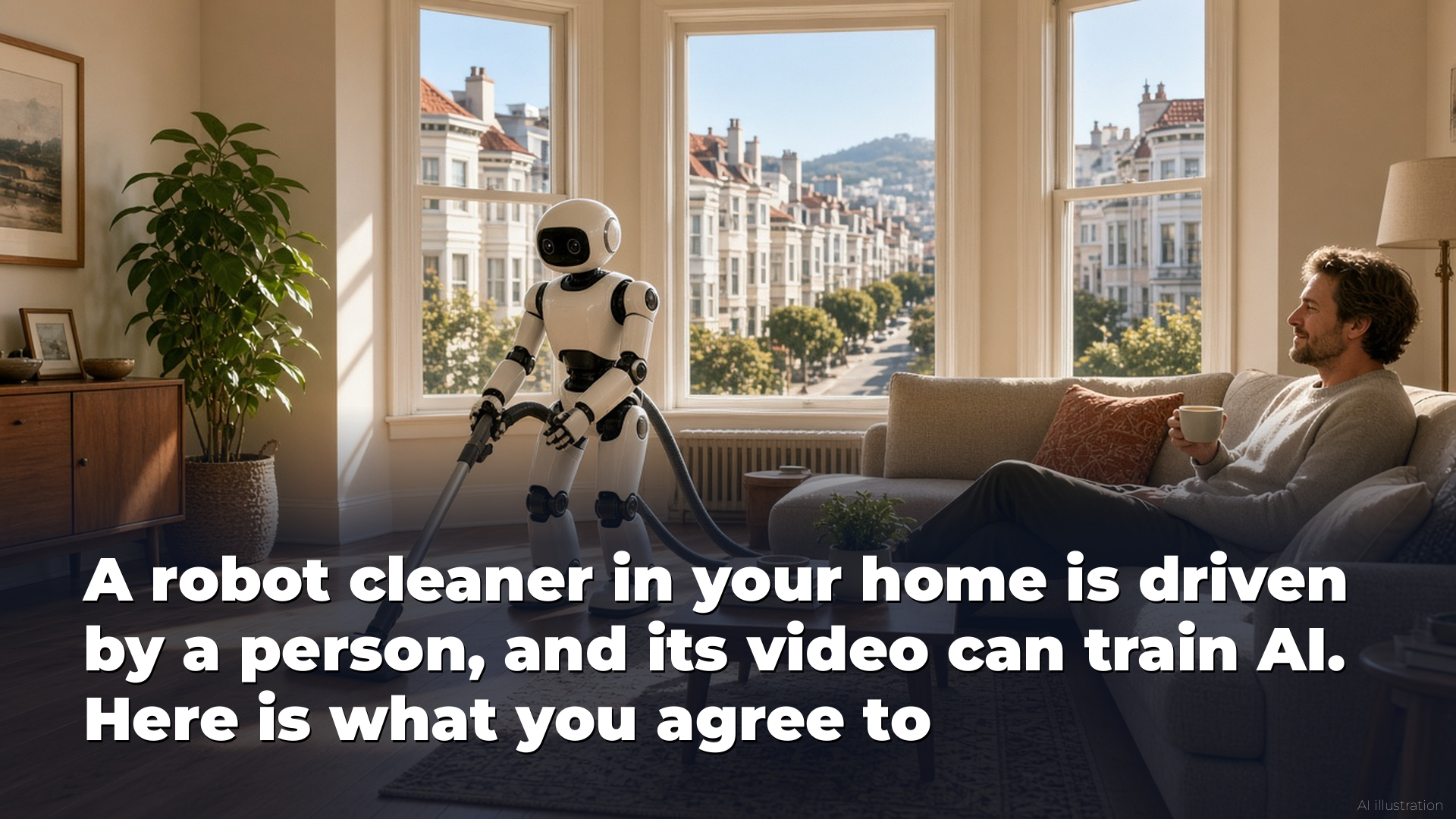
Before the cleaners arrived, a reporter taped paper over the photos of herself in her apartment. The cleaners were two humanoid robots. She knew their cameras would be recording.
That reporter is Christine Ji of MarketWatch. She tested a new robot cleaning service from Tau Robotics in San Francisco. Her story says the robots vacuumed her floors and wiped her counters, "with some help from humans behind the scenes." That last part is the real story. It is about what you agree to when one of these machines walks into your home.
The news. MarketWatch published its test on October 16. Most of the story is behind a paywall, so the taped-photo detail is from the full article. Tau's own Service Privacy Policy, updated October 12, spells out the rules in plain language. The privacy details below come from that policy.
How it works
A person is driving. The robots are teleoperated. That means a trained person steers them live from somewhere else, with help from AI. Tau says one operator controls each robot and sees its live camera feed. Think of a video call where the caller can also pick things up.
Who the operators are. Tau says they are all W-2 employees, meaning staff on a payroll, not gig workers or contractors. Some are hired through a staffing agency. All work on-site at Tau's own facility in San Francisco. None work from home or from outside the United States.
The cost. KTVU reported in August that the service costs $30 an hour. Tau's website says it usually sends two robots per cleaning. MarketWatch's headline calls them $55,000 robots.
Not for everyone yet. The service is invite-only and only in San Francisco.
What you agree to
Cameras are not optional. Cameras on the robot's head and wrists record for the whole visit. Tau says it cannot clean with the cameras off.
Your home becomes training data. Tau says the video is used to train AI that it hopes will one day clean with no human driver. The robot also builds a 3D map of the rooms it works in. Faces are not blurred. Tau says it does not use facial recognition.
Kept with no end date. Video is kept "indefinitely, or until you request deletion." If you ask, Tau says it deletes the raw video and drops it from future training. But if your footage has already trained a model, it cannot be "un-trained."
Some limits help. Tau says the microphones are disabled. Audio goes one way: the operator can speak through a speaker but cannot hear you. Bedrooms and bathrooms are skipped unless you opt in. You can mark other rooms or objects off-limits too. Anyone in the home can ask the operator to stop at any time.
Ink, not pencil: one mismatch to note. Tau's website FAQ says you can talk to the robots and "they will answer." Its privacy policy says operators cannot hear you.
Why regular people should care
Letting a cleaner into your home has always been about trust. Here, the trust stretches further: to a stranger watching through a camera, and to an AI that may learn from your living room for years. To be fair, Tau is unusually open about this. Its policy even reminds customers that the person who books cannot consent for everyone else in the home.
Before you book any camera-equipped home robot, ask:
- Who is watching live?
- What is recorded, and for how long?
- Will it train AI?
- Which rooms are off-limits?
- How do I stop it, and how do I delete the video?
What's next
More robots, more homes. KTVU reported that Tau plans to expand to other parts of the Bay Area and then to major U.S. cities, starting next year. Tau also says it will email customers before any major change to how it uses home footage. If you get an invite, read the policy first.