
By Casey Forge
Think of the first batch of bread from a brand-new bakery. The oven works and the loaves come out. But the baker is still adjusting the recipe, the timing and the heat.
That is roughly where Tesla says its humanoid robot, Optimus, stands this week.
The news is not that a robot is coming to your kitchen next month. It is that robots shaped like people are moving from stage demos to a real factory line. That is when questions about working beside them start to matter.
What happened
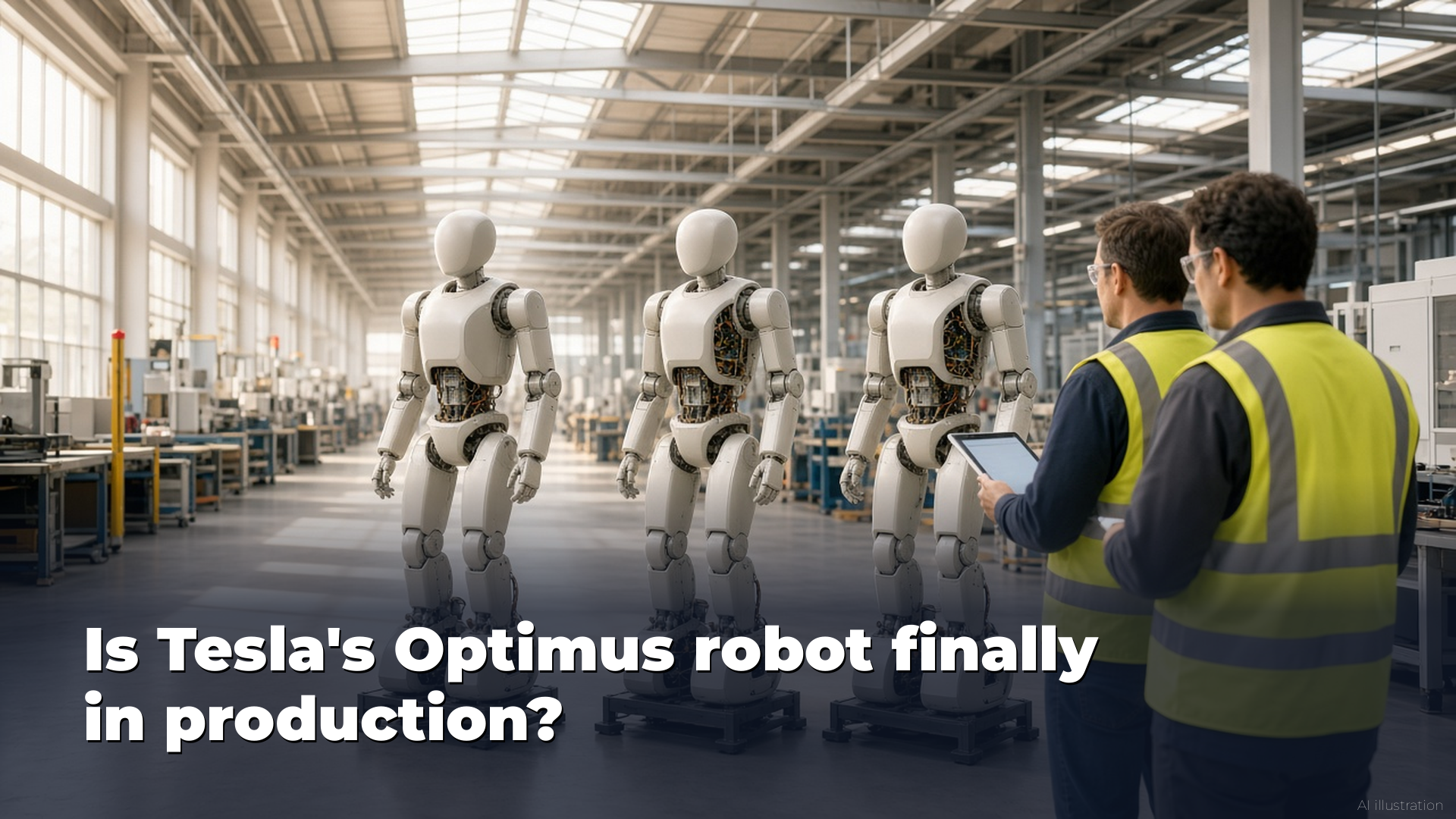
In its third-quarter update to shareholders, published October 21, Tesla wrote: "Optimus production began in Fremont on our high-volume lines. The bots coming off this line are the first production-quality bots that we have manufactured."
It added: "While we will continue to iterate on the hardware and manufacturing process, we have proven that the current manufacturing process for Optimus is suitable for a commercial product."
The update's factory table lists Optimus in California as "Early Ramp," meaning production is just getting going. A second Optimus site in Texas is listed as under construction. TechCrunch reports the Fremont line sits in factory space once used to build electric cars.
Tesla did not say how many robots it has built so far, what they will cost or who will buy them.
What Elon Musk said
On a call with investors the same day, Tesla CEO (chief executive officer) Elon Musk called this "early production." He said the start of making such a "radically new product" is slow and "somewhat bumpy," and asked people to temper their expectations.
He was frank about the work ahead. "There's still some things we need to tweak about the design, because you need to deliver a robot that is safe and reliable and has long duration, so it can't, like, wear out after a month," he said. "And there's still quite a lot of work to do with regard to the AI and the robot for it to be truly useful for open-ended tasks." (AI, or artificial intelligence, is the software that lets the robot see, decide and move.)
Musk said he expects those issues to be solved around the end of next year, and that this is when to expect Tesla to start delivering Optimus to companies outside Tesla, according to a transcript of the call. That is his expectation, not a promise.
Ink, not pencil: Tesla says production has started in Fremont. Still pencil: how many robots are being made, what they will cost, when other companies get them, and how well they work in real jobs. "Production-quality" is Tesla's own description; no outside group has tested the robots yet.
Why it matters
Humanoid robots are built in a human shape because our world is built for human bodies. Stairs, shelves, door handles and tools all fit people.
Tesla hasn't said which jobs Optimus will do first. But the next step Musk described is delivering robots to other companies, not to homes. So the first people to work near one are likely to be at work, not in the living room.
A real production line is often the quiet turning point when an idea becomes a product. The questions that matter most are human ones: Which tasks will these robots take on? Who will work beside them? And how will people be kept safe? Musk named safety and reliability among the things still to get right.
There is a hopeful side, too. Jobs that are dull, heavy or hard on the body are often the ones people would most like to hand off.
What's next
Tesla says it will keep improving both the robot and the way it is built. Watch for three things: the first real numbers on how many robots are being made, progress at the Texas site, and the first outside companies to put Optimus to work. For now, the honest headline is simple: the oven is on, and the first loaves are out.