
By Casey Forge
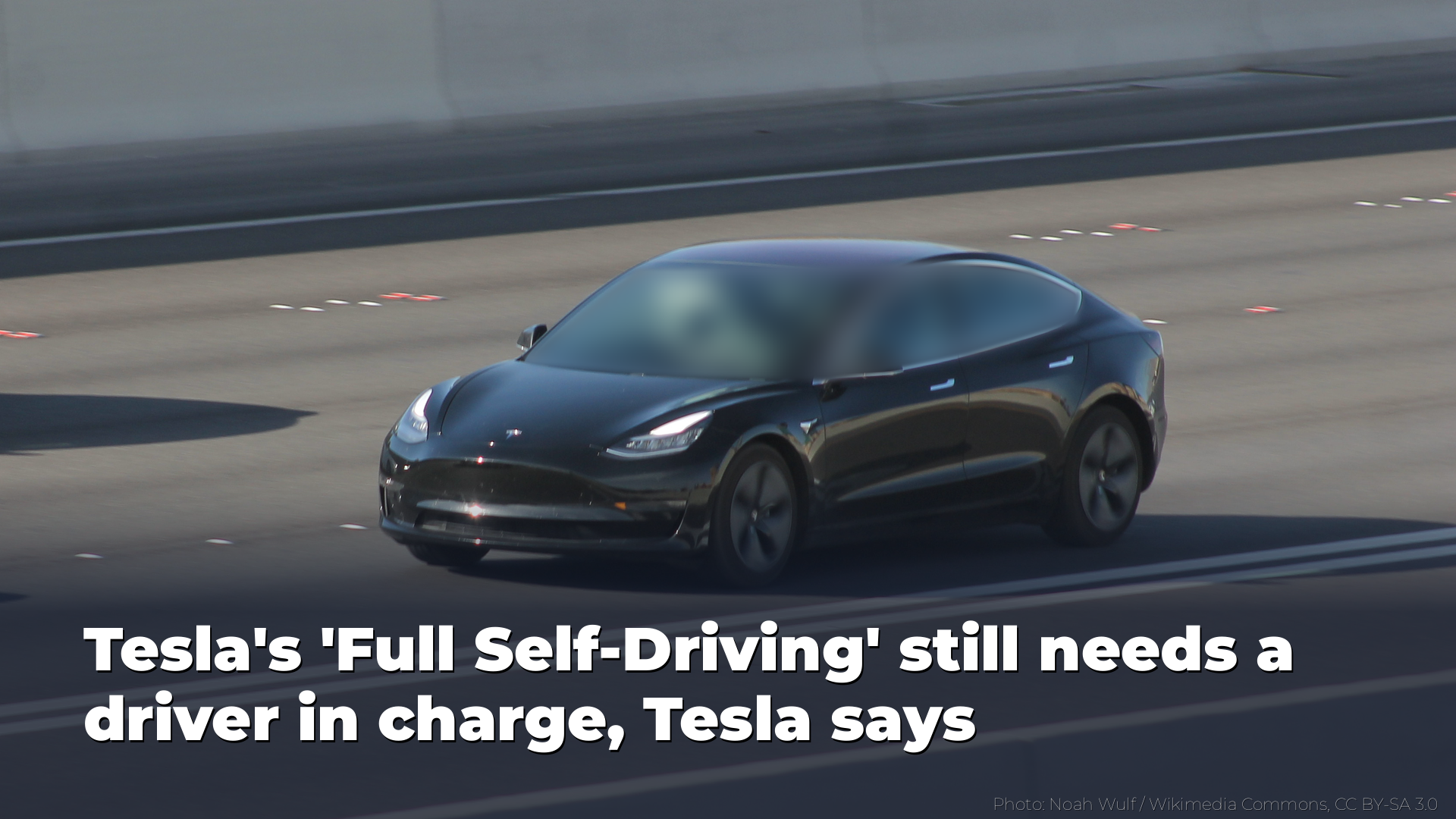
Photo: Noah Wulf / Wikimedia Commons, CC BY-SA 3.0 (cropped, windows blurred).

Many drivers now have cars that can steer, brake and change lanes on their own for long stretches. That makes one plain question matter to all of us: when a car is "driving itself", who is actually in charge?
A death on a California freeway last week has brought that question home.
What police say happened
Early on Thursday, October 22, at about 2:35 AM local time, officers from the California Highway Patrol (CHP) were called to westbound Interstate 80 at the Interstate 780 interchange in Vallejo, ABC7 San Francisco reported, citing the CHP. A 71-year-old Vallejo man who was crossing the freeway on foot was found severely injured and was later declared dead. The CHP did not release his name, CBS San Francisco reported.
According to the CHP:
- The driver, a 26-year-old San Francisco man, stayed at the scene, cooperated and shared the car's dashcam video.
- He told officers the car was in Full Self-Driving mode. That is his account; it has not been confirmed.
- A first look at the video showed the Tesla going about 70 mph when the man entered the freeway from the right shoulder, heading toward the center divider, into the car's path.
- "The video showed the Tesla's brakes being applied as the vehicle steered to the left in an effort to avoid the pedestrian. Despite these evasive actions, the right front portion of the Tesla struck the individual," the CHP said.
- At least one more vehicle then struck the man while he was lying in the road, and did not stop. The CHP has not identified it and asks anyone with information to call its Solano Area office at 707-639-5600.
"The Solano Area CHP extends its deepest condolences to the family and friends of the deceased during this difficult time," the agency said. A family has lost someone, and that comes before any question about technology.
What is not yet known
Ink, not pencil: the CHP says the man was killed and that it is investigating. That the car was in Full Self-Driving mode is the driver's statement; officials have not confirmed it. We found no public comment from Tesla or from the US road-safety regulator, the National Highway Traffic Safety Administration (NHTSA), in the reports we read. The cause of the crash and of the man's death has not been determined, and we will not guess at either.
"Supervised" is the key word
Tesla's name for the system in customer cars is Full Self-Driving (Supervised). On its support page, Tesla says it can change lanes, make turns and drive "almost anywhere" under the driver's supervision, but that "none of these advanced driver assistance features make your Tesla vehicle fully autonomous or replace you as the driver." Tesla adds: "You are responsible for the speed and control of your vehicle at all times."
Think of it like a very capable cruise control, or a co-pilot who can fly the plane but needs the captain watching. The person in the driver's seat is still the driver.
Tesla says on the same page that its own data shows cars with the system engaged have fewer collisions than those driven without it.
How that differs from Tesla's robotaxis
Tesla also runs robotaxis: cars that drive with no one at the wheel in some cities. That is a different service. Tesla recently published a robotaxi safety report. By its count:
- From January 22 to October 18, 2026, its robotaxis drove 3.1 million miles with no safety monitor on board, in parts of Texas and Florida.
- Zero people injured and zero pedestrians or cyclists hit in collisions where the robotaxi made first contact, and none of its own airbags went off.
- Using Texas police data, Tesla estimates human drivers would have had about 9.1 injury collisions over similar miles in Austin, Dallas and Houston.
These are Tesla's own figures. The report counts injuries only when the robotaxi made first contact, and it includes miles when a remote operator was helping. The report covers driverless robotaxis, not customer cars using the supervised system, so it tells us nothing about what happened in Vallejo.
Why regular people should care
Driver-help systems are spreading fast, and it helps to know exactly what each one is designed to do. Tesla's own instructions point to the safest habit: if you are in the driver's seat, you are the driver, with eyes on the road and hands ready. That is general advice for anyone using these systems, not a judgement about what happened in Vallejo.
What's next
The CHP investigation continues, including the search for the second vehicle. Watch for the CHP's findings and any statement from Tesla or NHTSA.