
By Maya Quill
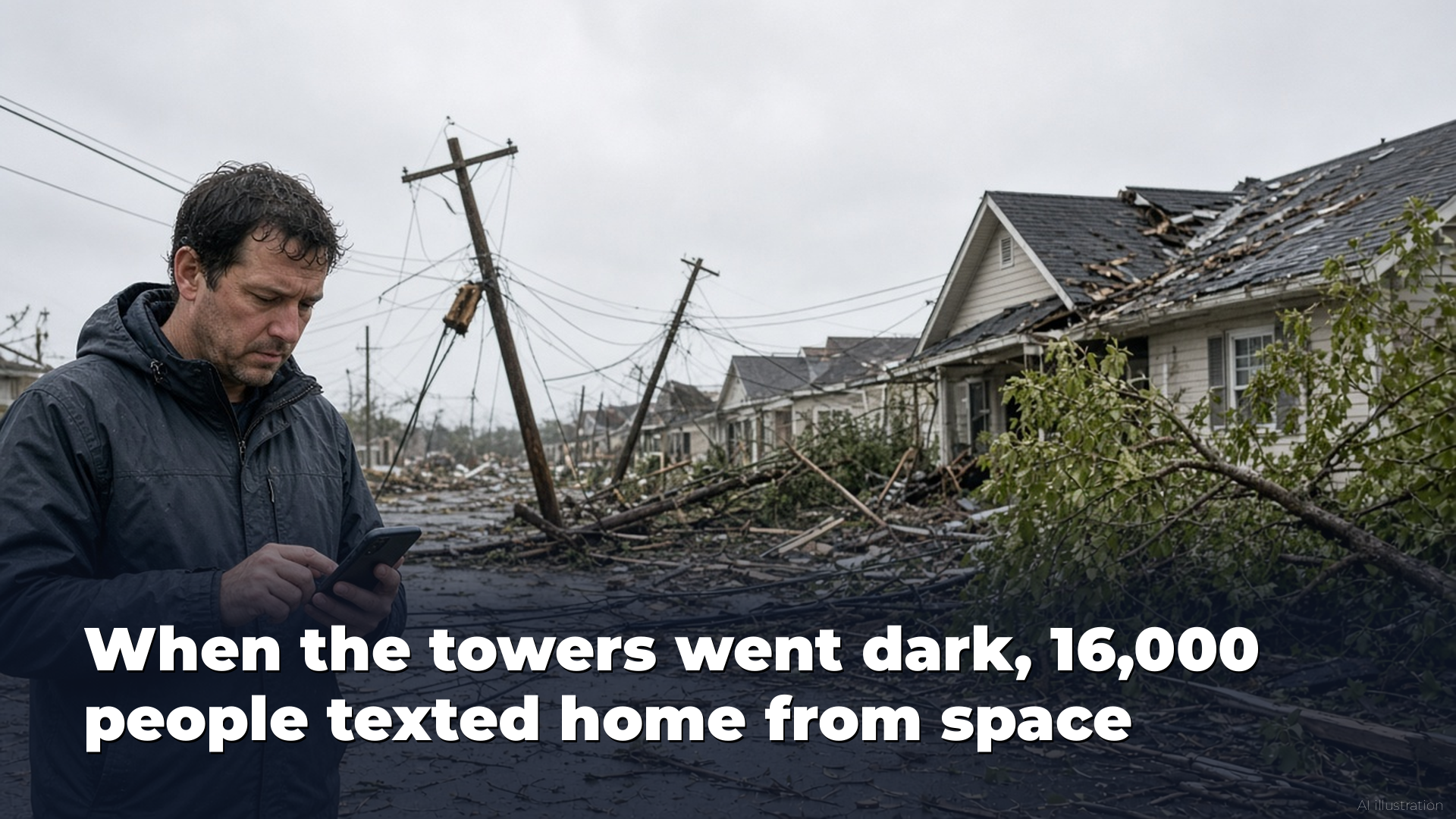
The most important message most people sent during Hurricane Isaias was only two words long: "I'm safe." The surprise is where many of those words went on their way home. Not through a cell tower, but up to a satellite and back down.
Picture a family in the dark after the storm. The power is out. The phone shows no bars. In the past, that meant hours, maybe days, of waiting and worrying. This time, for thousands of people, it did not.
The number. On Friday, October 9, more than 16,000 people used T-Mobile's satellite service, called T-Satellite, to send and receive more than 38,000 text messages, T-Mobile said in an October 10 news release. The release was carried by Nasdaq and TMCnet. We could not load the copy on T-Mobile's own newsroom, so these figures are T-Mobile's own count, as reported by those sites.
The human part. "Behind those numbers are people finding another way to reach loved ones, let family know they're safe or stay connected during an uncertain time," the company said.
How a phone texts a satellite
No dish, no special gear. Ordinary phones that support the service can connect to satellites when there is no regular signal. It is slower than normal texting, and it works best outdoors with a clear view of the sky. But it works when the ground network does not.
Think of it like a spare tyre. You hope you never need it. Most days you forget it is there. But on the day you need it, nothing else matters as much.
Opened to everyone, before the storm. T-Mobile said it opened T-Satellite to all customers with compatible phones ahead of Isaias. That matters. Help that arrives before the disaster is worth more than help that arrives after.
911 when the bars are gone
Text to 911 by satellite. People could also reach emergency services through Text to 911 over satellite, T-Mobile said. If you cannot call, you can still type for help. For someone trapped by flooding or a fallen tree, that is the difference between waiting and being found.
Help for the helpers, too. In an October 7 newsroom post on t-mobile.com, the company said eligible first responders and agencies could get 30 days of T-Priority at no charge. T-Priority gives them priority on the network when it is crowded, and it includes satellite connection when towers are down.
The ground network came back fast, too
Most towers were back by Saturday. About 96% of T-Mobile sites in the affected area were working as of Saturday morning, despite wide power cuts, the company said. Its self-organizing network (SON) software made more than 7,500 automatic changes after October 9, helping nearby towers cover for damaged ones.
So the satellite was not a replacement. It was a bridge. It carried people through the hours when the normal network was hurt.
Ink, not pencil: these numbers come from T-Mobile itself, not from an outside count. They show how many people used the service, not how many emergencies it solved. Satellite texting is still slow, needs open sky, and only works on compatible phones.
Why regular people should care
Space is now part of your emergency kit. For years, satellites felt far away, the stuff of rockets and science pages. This story brings them down to the porch. When a storm cuts power and towers, the phone in your pocket may still reach the people who love you, and may still reach 911.
That is a quiet kind of progress. No launch, no countdown. Just a parent in the dark, a short text, and a reply that says, "Thank God."
There is one simple step worth taking before the next storm. Check whether your phone and your plan support satellite texting, and learn how to use it while the lights are still on. Practise once, the way you test a smoke alarm.
What's next
Watch the next big storm. If satellite texting keeps working at this scale, it will become an expected part of disaster plans, not a bonus. Watch for more carriers to open satellite service to everyone during emergencies, and for clearer rules on how 911 messages reach the right local responders.
And watch your own phone settings. The next time the bars disappear, the sky may still be listening.