
By Maya Quill
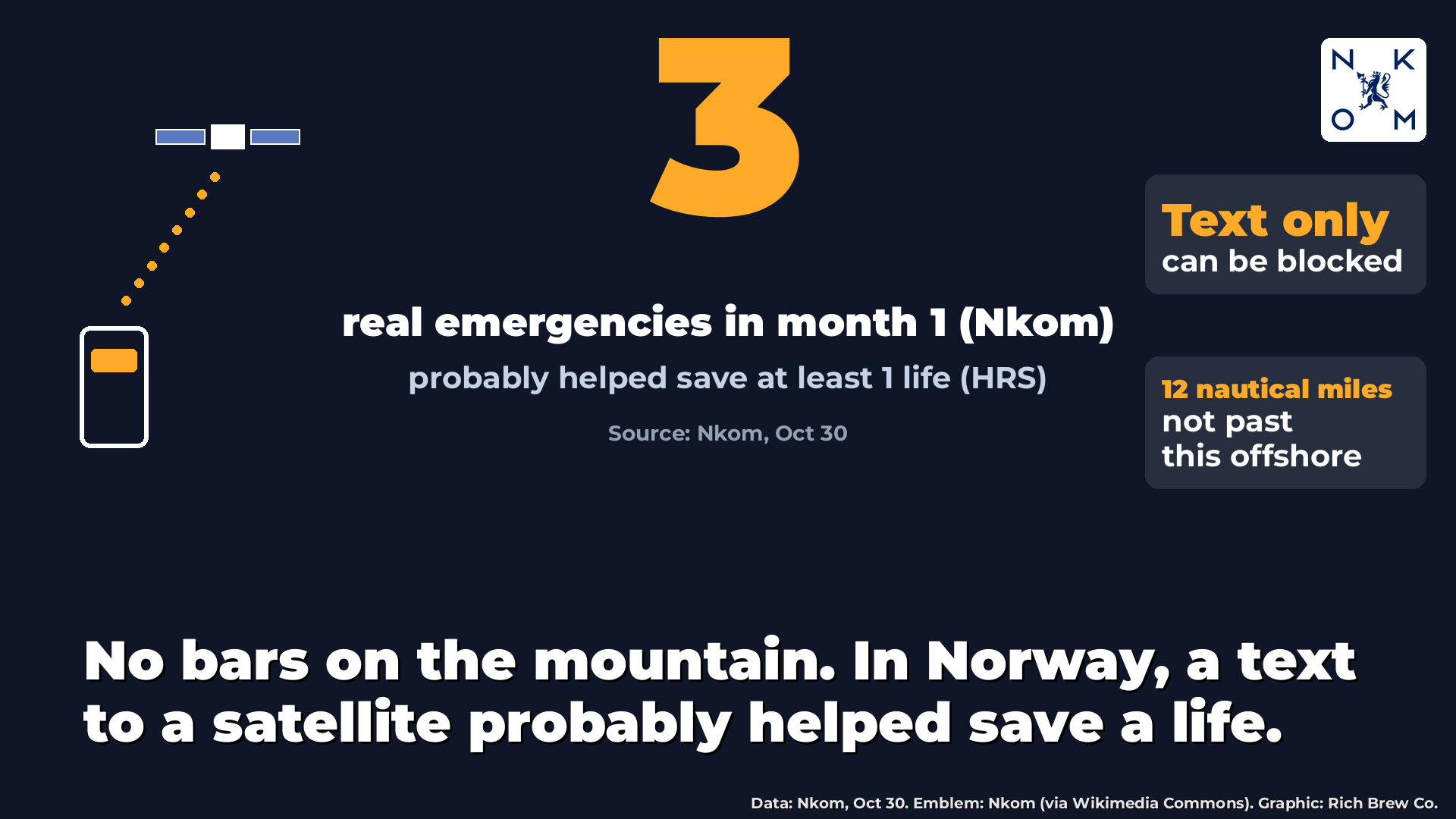
Imagine you twist an ankle on a quiet mountain trail, the sun is going down, and your phone shows no bars. In Norway, that moment now has a new answer: a text sent straight up to a satellite. In the first month, people used it in three real emergencies, and rescuers say it probably helped save at least one life. If you hike, fish, hunt or drive back roads, this is worth five minutes of your coffee time.
What happened
On October 30, Norway's telecom regulator, Nkom (the Norwegian Communications Authority), put out a press release about Apple's "Emergency SOS via satellite." The feature became available in Norway on September 29 as a pilot. It lets people with newer iPhones and no mobile coverage text Norway's Joint Rescue Coordination Centre (Hovedredningssentralen, or HRS).
Nkom says it started the push in 2024, reaching out to Apple, the emergency services and HRS.
- Three real emergencies in the first month, according to Nkom.
- At least one life probably helped. "Of the three real incidents that have come in during the first month, Apple SOS has probably helped save at least one life," said Rune Danielsen, rescue leader and project lead for Apple SOS at HRS (our translation from Norwegian).
- Norway's news agency NTB carried the same quote on November 1, via Finansavisen. We found no details about the three cases themselves.
How it works
Think of it like passing a note to someone across a big room, instead of shouting. Your phone asks a few quick questions about what happened, then sends your answers to a satellite. After that, you keep texting with rescuers. There is no normal voice call.
According to Nkom, it works on an iPhone 14 or newer with iOS 26.4 or later, and on Apple Watch Ultra 3 or newer with watchOS 26.4 or later. Apple's support page says you need to be outside, with a clear view of the sky and horizon.
The limits, in plain words
Nkom was clear that this is a helper, not a magic shield:
- Text only. No talking.
- It can be slow. In ideal conditions, one message can take 30 seconds or more. If something blocks the signal, it can take several minutes.
- It can be blocked. Mountains, buildings and trees can cut the connection, and in some areas it may be unstable or not work at all.
- Not far offshore. It does not work more than 12 nautical miles (about 22 kilometres) from the coast.
- Battery matters. A dead phone sends nothing.
Ink, not pencil: the service is "a supplement to, but no replacement for, more specialised terminals and services," said Johannes Myhre Vallesverd of Nkom (our translation). For planned trips without coverage, longer trips and expeditions, Nkom says keep your emergency beacon, satellite phone or radio.
The human side
"In an emergency, early warning can be the difference between life and death," Danielsen said (our translation). Behind each of those three cases was someone who needed help, and a rescue team that still got the message.
Nkom also wants Android users included. It says it has asked Google whether it is interested in a solution for Norway.
Why regular people should care
You may already carry this. Apple's support page lists Canada and the U.S. among about 20 countries, besides Norway, where Emergency SOS via satellite works. Apple says it is free for two years after you activate an iPhone 14 or later. Before your next trip, try the Satellite Connection demo on your phone and set up your Medical ID and emergency contacts. Do it at home, not on the mountain.
What's next
Nkom says the pilot will teach it more about where the service works well. Watch for an answer from Google on Android phones. Until then: charge your phone, try the demo, and still pack the beacon.