
By Maya Quill
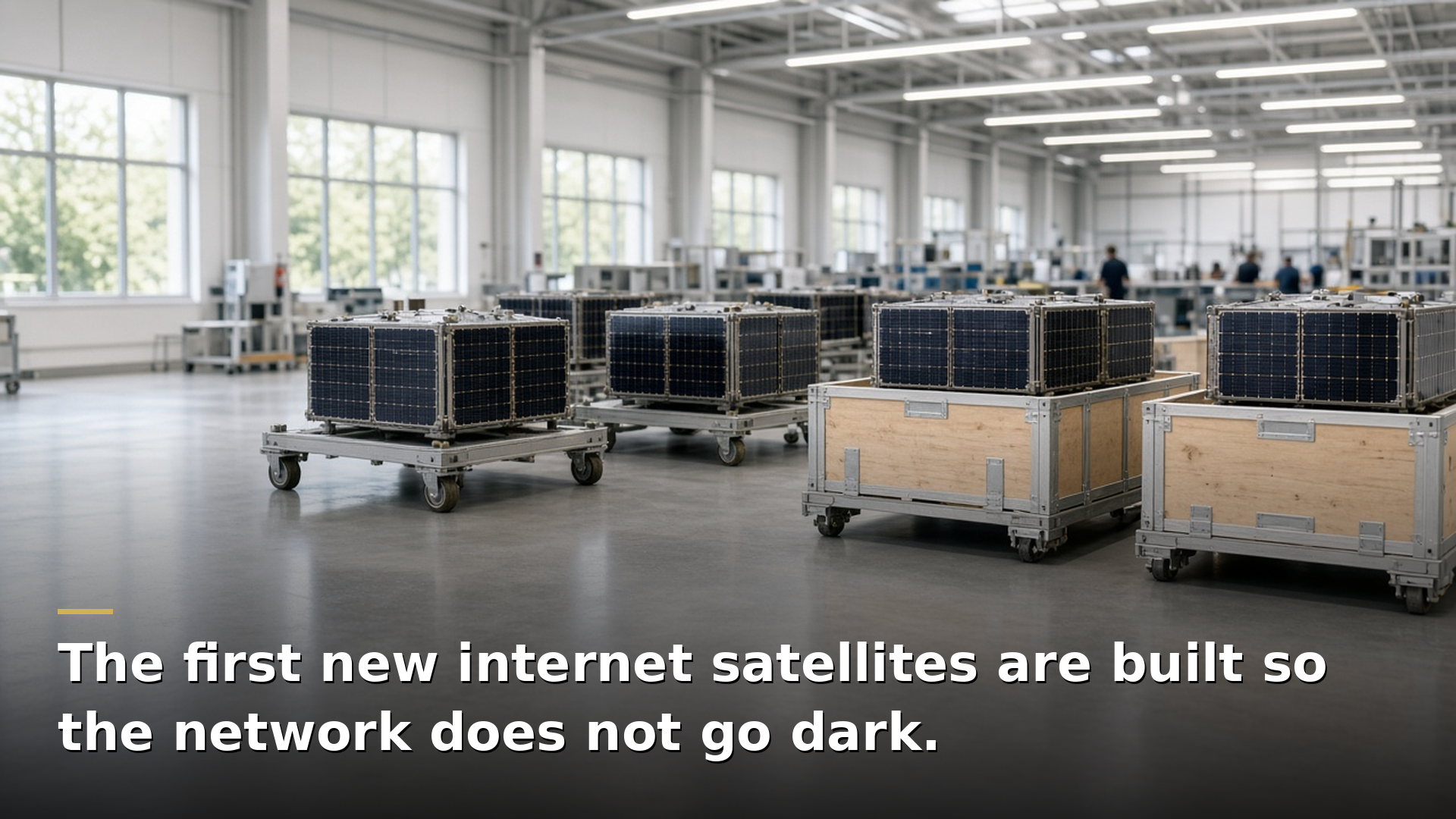
The first new OneWeb internet satellites are built, and they are not in orbit yet. On October 2, Airbus Defence and Space delivered 32 next-generation spacecraft to Eutelsat. The satellites are being prepared to ship from Toulouse, France, for a launch in the United States.
A renewal, not a launch day. Those 32 open a planned fleet of 669 next-generation OneWeb satellites. Older craft are nearing the end of their working lives. The new ones are meant to step in so customers do not lose the low-orbit links they already use. Eutelsat says the new fleet should also raise what the network can do for businesses, governments, and institutions.
Europe built them. Series production is back at Airbus's constellation plant in Toulouse. Eutelsat's release says this first batch is preparing to ship for an upcoming launch with SpaceX. Airbus's own release names a U.S. launch and does not name the rocket. Neither release gives a date or a pad.
Ink, not pencil: delivery and shipping prep are real. A calendar slot for orbit is not in these releases. "Upcoming" is not a booking.
Eutelsat chief Jean-François Fallacher framed the handoff as a promise to keep service running while the network is renewed. Airbus's Alain Fauré, head of space systems, called it proof that high-volume production is back in Europe.
Why regular people should care
Low-orbit internet is how ships, planes, remote clinics, and disaster crews stay online when ground networks fail. The Monday stake is whether that network keeps working while the old satellites age out. Fresh spacecraft are how continuity gets built. A launch date is still missing.
What's next
The satellites still have to ship, launch, and join the constellation. Watch for a firm U.S. launch schedule, and for how fast later batches in the 669-satellite plan follow. Until then, the news is industrial: the first wave is built in Europe, and the renewal has started on the factory floor.