
By Maya Quill
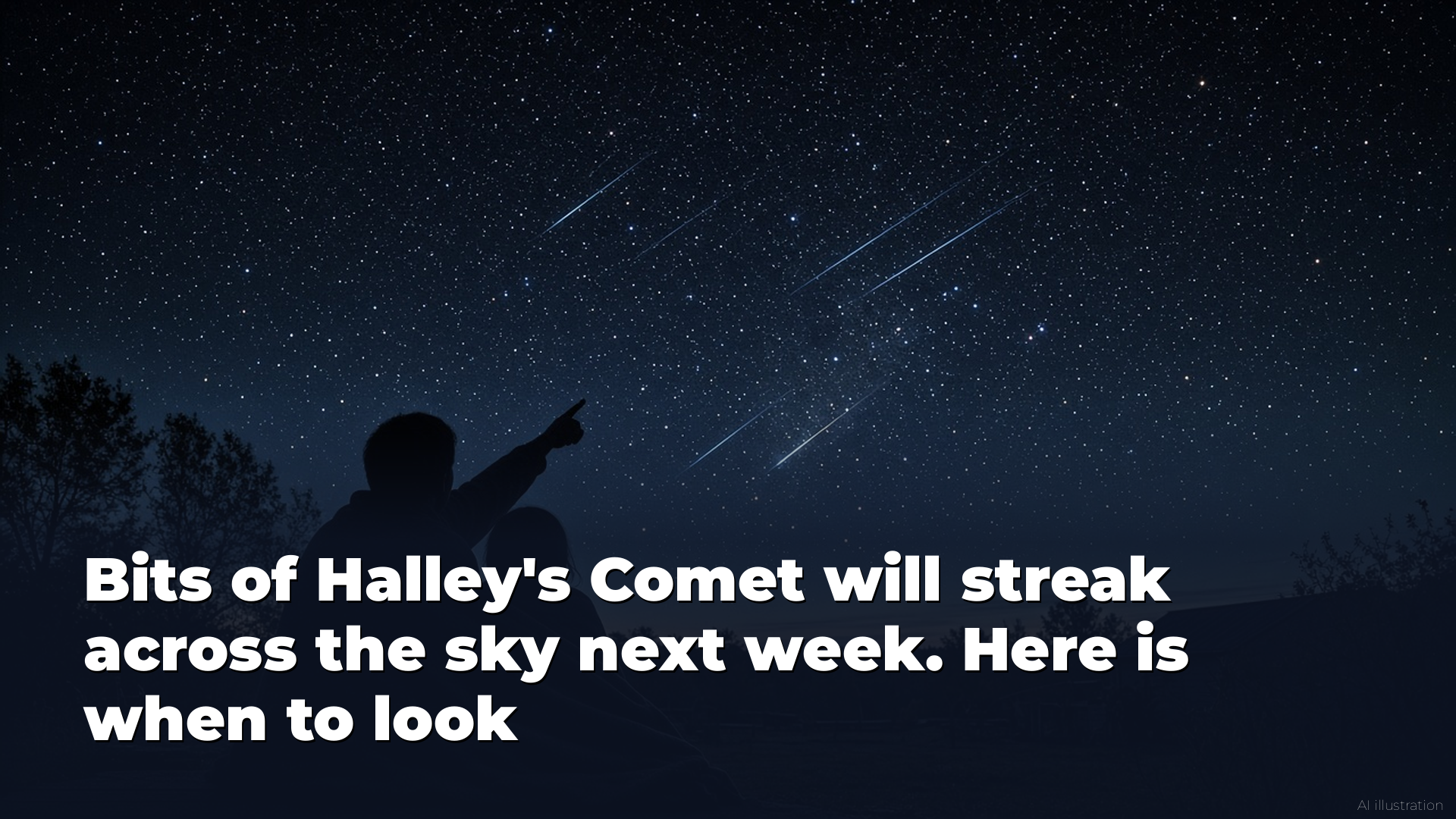
You may never see Halley's Comet itself, but next week you can watch pieces of it burn up over your house, for free. The Orionid meteor shower peaks on the night of Wednesday, October 21, into the morning of Thursday, October 22.
Picture a parent waking a sleepy child at 4 a.m., wrapping them in a blanket on the back step, and pointing up just as a bright streak crosses the sky. That is the kind of memory this shower can give you. All you need is a dark spot, a little patience and an early alarm.
The news. NASA's October skywatching guide lists the Orionid peak for October 21 to 22, with one warning: this year the Moon will get in the way for part of the night.
What you are seeing
Comet dust. Each time Halley's Comet swings near the Sun, it sheds ice and dust. Every October, Earth passes through that dusty trail. The tiny bits hit our air and burn up as shooting stars. It is a bit like driving through a cloud of bugs on a summer night: the car moves into them, not the other way around.
Very fast. According to NASA's Orionids page, these meteors enter the atmosphere at about 66 kilometres (41 miles) per second. Fast meteors can leave glowing trails that last for seconds, and some become bright fireballs.
How many. NASA's page, citing the American Meteor Society, says you can expect about 10 to 20 meteors an hour under dark skies.
When to look (Pacific Time)
The Moon problem. NASA says a bright waxing gibbous Moon, meaning more than half lit and growing, "will wash out some of the fainter meteors this year." The best chance is the few hours before dawn, after the Moon sets.
Your window. By our calculations for the US and Canadian West Coast, the Moon sets around 3:20 to 3:40 a.m. Pacific Daylight Time (PDT) on Thursday, October 22. The sky stays fully dark until roughly 5:30 to 6 a.m. PDT. That gives you about two good hours, from around 3:30 a.m. until first light. Elsewhere, the times shift, so check your local moonset.
Missed the peak? NASA says the shower is active from October 2 to November 7, so the nights just before and after the peak can also be worth a look.
How to watch
- Get away from street lights if you can.
- Bring a blanket or a lawn chair and lie back. In the Northern Hemisphere, NASA suggests facing your feet southeast.
- Give your eyes up to 30 minutes to adjust, and keep your phone screen off.
- Do not stare only at the constellation Orion, the point the meteors seem to come from. NASA says they can appear anywhere, and look longer a little away from it.
Ink, not pencil: the meteor count is NASA's typical figure for dark skies, not a promise for this year, and the Pacific times are our own estimates for West Coast cities.
Why regular people should care
Halley's Comet only comes back about every 76 years. It was last seen by casual observers in 1986 and will not return until 2061. This shower is a chance to see it in pieces, with no ticket, telescope or app. It is also one of the few events you can share with a child, a parent or a neighbour just by stepping outside.
What's next
Another free show. On the night of October 27 into the 28th, NASA says the Moon will pass close to the Pleiades, a star cluster also called the Seven Sisters. Look east in the evening. You can see it with your own eyes, and binoculars will show even more.