
By Maya Quill
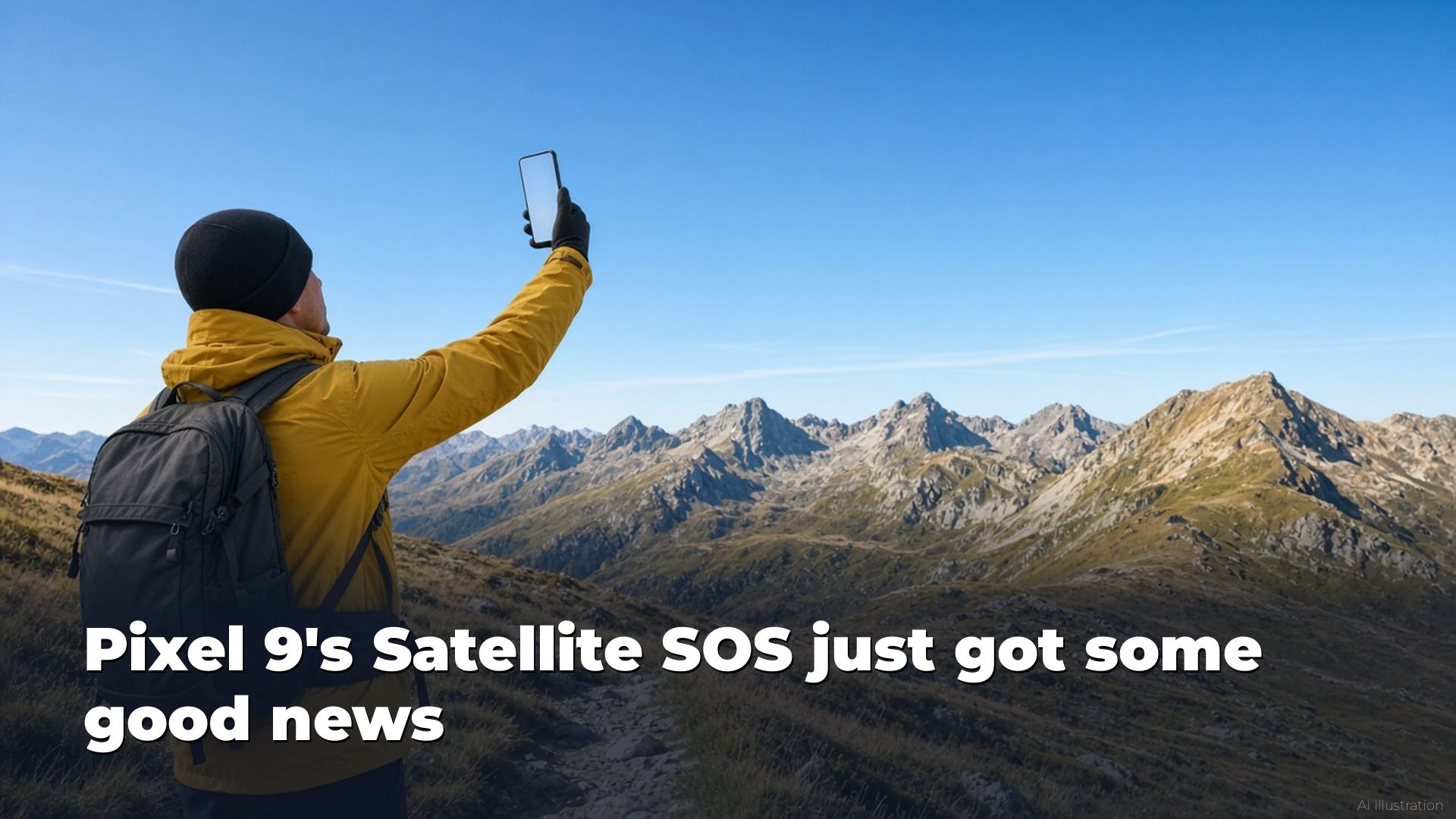
Picture a hiker on a mountain trail. She twists her ankle, the sun is getting low, and her phone says: no signal.
Some phones can still reach for help by talking to a satellite. If you own a Google Pixel 9, there is good news this week: that lifeline stays free for one more year.
What happened
Google launched Satellite SOS with the Pixel 9 phones in August 2024. It lets you text emergency services and share your location when there is no mobile network and no Wi-Fi.
Google promised it free "for the first 2 years after activation," and its support page still says so. For Pixel 9 phones, that window ran out around August 2026, and it wasn't clear what would happen next.
Now Google has answered. A spokesperson told PCMag on October 20: "Confirming that we've extended this offering, at no additional cost, for one additional year. We have no details to share beyond that at this time." 9to5Google followed on October 21.
It's a bit like a gym that was about to start charging, then said, "Stay another year on us." Nice, but nobody has said what the price will be later.
Ink, not pencil: One more free year for Pixel 9 phones is confirmed by Google. What happens after that, and what it might cost, is not. Google gave no other details.
Which phones have it
Google's help page says Satellite SOS is on every Pixel phone since the Pixel 9, except the Pixel 9a.
It works in the US, Canada and Puerto Rico, plus the UK, Australia and many European countries. Google notes that its country list does not guarantee coverage. PCMag reports Google uses satellites from Skylo, a company based in Mountain View, California.
iPhone owners have something similar. In its September 9 announcement, Apple said it is "extending free access to satellite features for an additional year for existing iPhone 14, iPhone 15, and iPhone 16 users." That covers phones activated in a supported country before midnight Pacific time on September 9. Apple hasn't said what it might charge later either.
How to practice before you need it
The worst time to learn a new tool is during an emergency. Google offers a safe demo:
1. Open Settings. 2. Tap Safety & emergency, then Satellite SOS. 3. Follow the demo steps. Your mobile network switches off for the demo and comes back on when you exit.
A few things worth knowing:
- You need open sky. Trees, hills and buildings can block the signal. On-screen steps show you which way to point the phone.
- It is not instant. Google says connection times vary. Once you're connected, emergency services should reply by text within a few minutes.
- Google Messages must be your default texting app. If you switch apps, Satellite SOS stops working.
- In a real emergency, dial your local emergency number (like 911). With no signal, the phone offers the satellite option.
The bigger picture in the sky
More satellites for phones are on the way. On October 19, Globalstar announced that the US FCC (Federal Communications Commission) had approved its next group of satellites, called C-3. The plan is 48 satellites in LEO (low Earth orbit) plus six spares.
Globalstar's network already carries Apple's satellite features, and Amazon is in the process of buying the company. PCMag reports Skylo is also moving to use Globalstar satellites.
Why it matters
You don't need to be a climber for this to matter. A long rural highway, a storm that knocks out cell towers or a day on the water can all leave you with no signal. A phone that can still call for help is like a spare tire: you hope you never need it, and you're glad it's there.
What's next
Pixel 9 owners have another year at no cost. Neither Google nor Apple has published a price for later, so watch for news before the new deadline. In the meantime, take two minutes this week to try the demo.