
By Sam Rivera
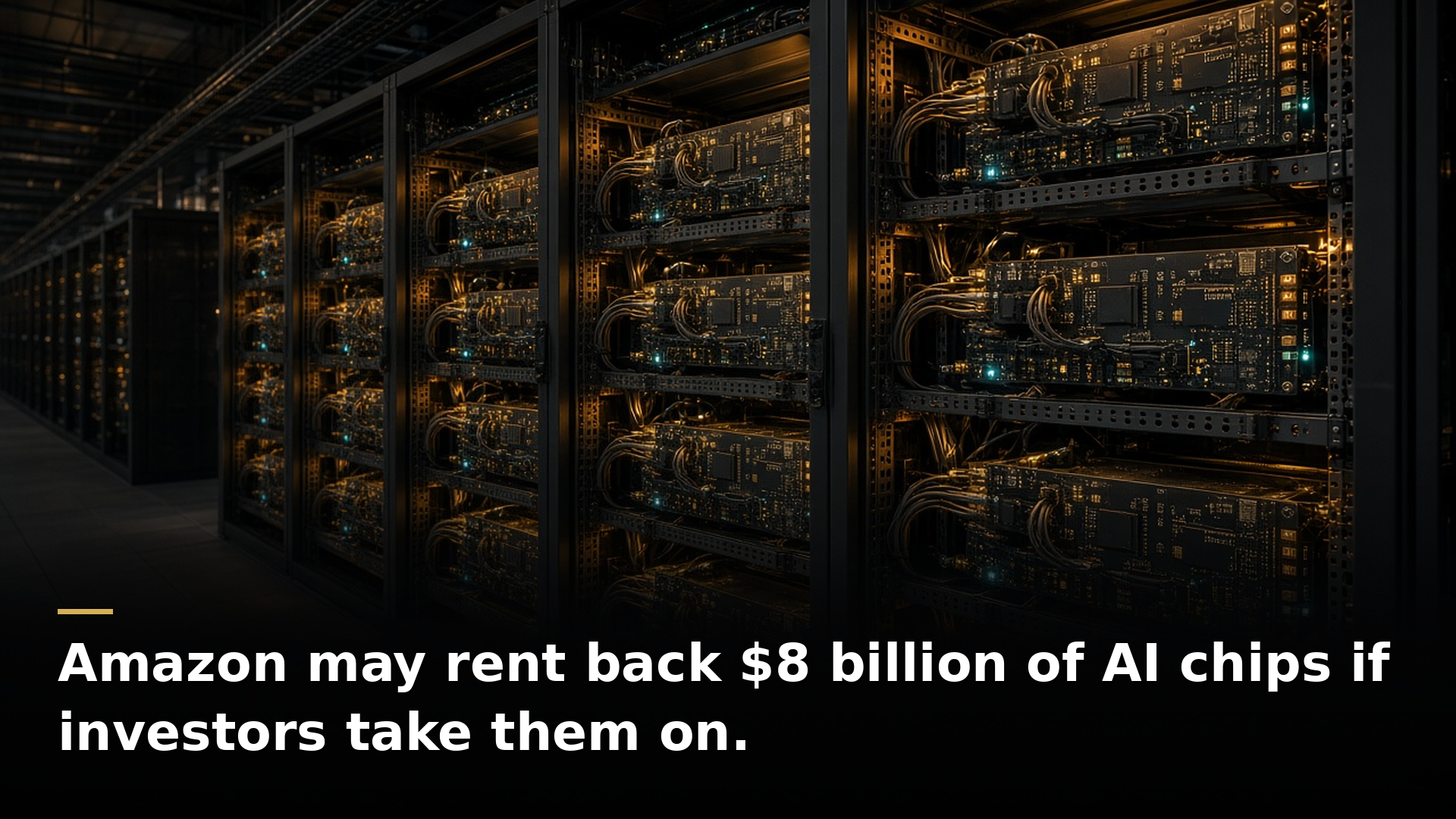
Amazon is in talks to move about $8 billion of Nvidia AI chips it already runs into a separate investor vehicle, then lease those chips back. The draw, if the talks hold, is cash for Amazon now and aging hardware for the people who would fund the vehicle.
Not a signed deal. Amazon declined to comment. The conversations are still live and can still change. People familiar with the talks, in a Financial Times report carried by the Financial Post, say the chips already sit in more than a dozen U.S. data centers across five states, including Nevada and Virginia. Amazon bought or leased them. They are not a pile of unused parts.
Who would own the vehicle. Funding would be mostly debt. Outside investors could take up to 10% of the equity. Amazon itself would not own a stake. Investors expect an investment-grade rating because Amazon is double-A, which could open the door to insurers and pension funds. The reported aim is a lighter balance sheet. That is the pitch in the talks. It is not proof the chips come off the books.
The chips have a clock. These are Nvidia's current heavy systems, called Grace Blackwell. The next wave, Vera Rubin, is expected to supersede them soon. Amazon's filings say each generation is expected to last at least five years. The spending context is large: about $220 billion of capital expenditure this year, mostly for AWS. In July, demand weakened for Amazon's longer-dated bonds when the company sold $25 billion of bonds.
Analysis, not a reported fact. Chips depreciate fast. Moving them into a vehicle and leasing them back can be a smart cash move for Amazon and a poor one for the investors in the vehicle.
Little or no gain. If the chips transfer near book value, Amazon likely books little or no gain. Think break-even, not a windfall from reversing depreciation. The cash can go into longer-lived assets or higher-margin work. The obsolescence sits with the investors.
Not a clean exit. A sale-leaseback often leaves a lease liability and a right-of-use asset. Call this a cash-and-obsolescence move unless a filing shows otherwise.
Ink, not pencil: nothing here is closed. Treat the $8 billion figure as a live negotiation. The accounting read above is analysis, not a line from the Financial Times.
Why regular people should care
Cloud apps, video, and AI tools that run on Amazon's servers sit on expensive chips. How those chips get financed can change how much capacity gets built, and how fast. The Monday stake is simpler than a bond term sheet: who pays for machines that go stale, and whether the cash freed up builds something that lasts longer.
What's next
Watch whether terms get locked, how the vehicle is rated, and whether any filing shows what stays on Amazon's books after a leaseback. Until signatures land, this is talks, not a sale.