
By Sam Rivera
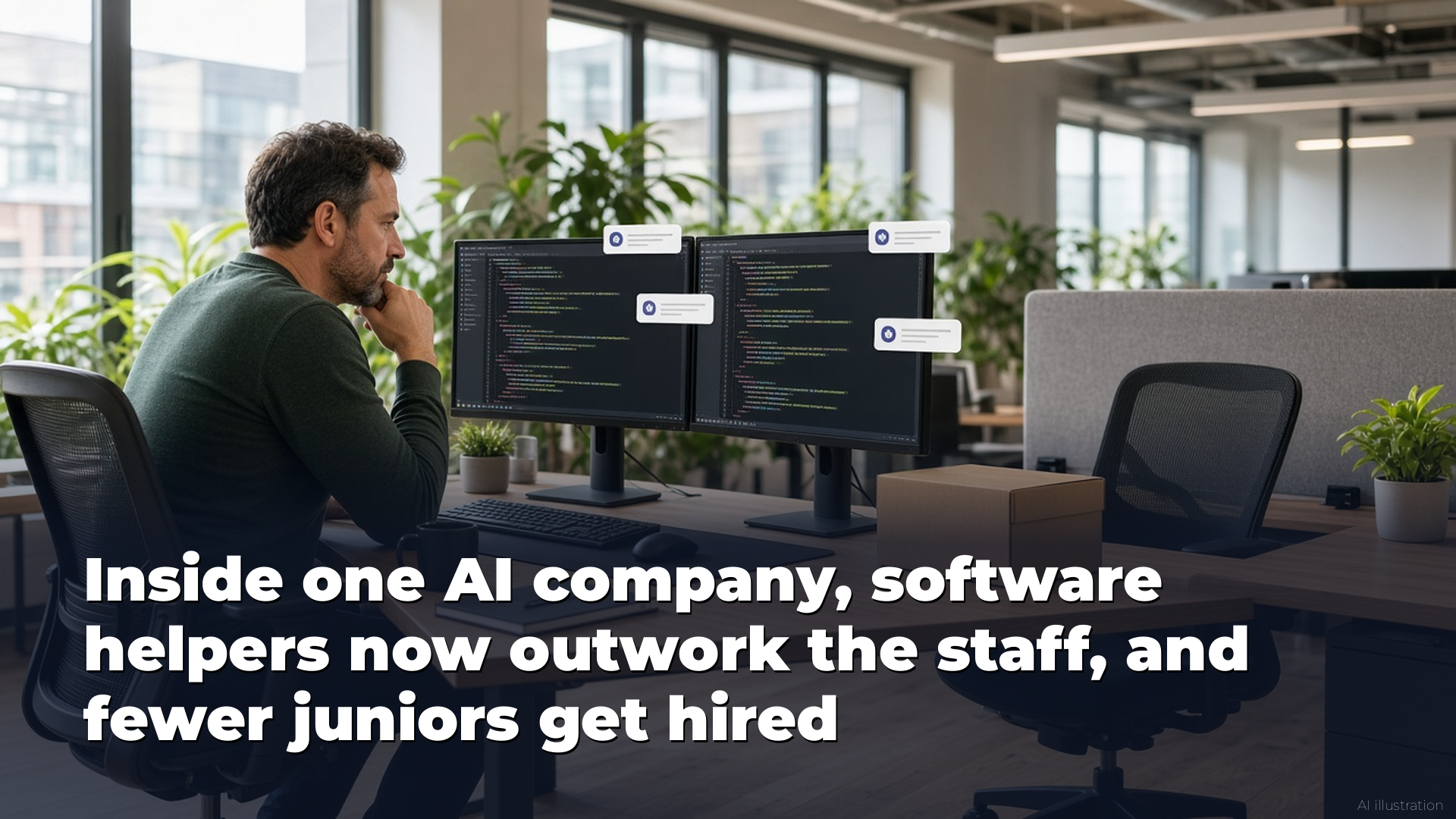
What does a day at work look like when software does most of the typing? One company has opened its own books to show us. The short answer: people get more done, spend more time checking, and fewer young people get hired.
One engineer at the company put it this way: work feels like facing "an army of Claudes, with every one asking for my attention." Claude is the company's chatbot. Another engineer compared it to babysitting, where one child insists "it's an emergency that my juice box is opened" with the same alarm as a child who has cut a finger.
The news. On October 16, Anthropic published a report on its own workplace, written by its researchers Nathan Wilmers, Regina Catipon, Maxim Massenkoff and Peter McCrory, plus a companion survey.
What the report found
Software helpers outwork the staff. The company uses "agents," programs that carry out several steps of a task on their own. By August, the agents that employees started ran six times as many hours as those employees worked. That counts how long the software was running, which is not the same as an hour of human work.
Fewer juniors. Junior staff fell from 21% to 14% of technical employees since early 2025. The share of new technical hires who were junior fell even faster, from 27% to 9%.
More output. Code changes per engineer are about five times what they were six months ago. The company itself calls code "a notoriously imperfect measure." Lawyers also handled more contracts, and sales staff closed more deals.
People are now the slow part. Reading everything the agents produce would take more than half the work week, even for staff who do not write code. The typical employee spends 20% more time in meetings than a year ago.
New skills wanted. Hiring managers now look more for independence and good judgment than for narrow technical know-how.
What staff expect
The survey compared Anthropic staff with almost 11,000 US adults polled by Morning Consult in August. More than half of staff expect AI, or artificial intelligence, to be able to do at least 80% of their current work by 2030. Only 5% of Americans expect the same.
What the company says it is doing
Anthropic says it has set up an early-warning system to spot jobs at risk and prefers moving people into new roles inside the company. One executive is quoted saying, "a workforce that is anxiously worried is not a workforce doing its best work." The report admits these steps do not fix the drop in junior hiring: protections for current staff "will not benefit those not hired to begin with."
Ink, not pencil: this is a company reporting on itself, using its own data, and no one outside has checked it. Anthropic sells these tools, and it is one fast-growing tech firm, not the whole economy.
Why regular people should care
Think of a kitchen that gets a dozen new food processors. Dinner comes out faster, but someone still has to taste every dish, and the kitchen may stop hiring trainee cooks. That is the worry for young people starting out: the entry-level jobs where many of us learned the basics may get scarcer in some fields. The more hopeful part is what the company says it now values most: judgment, independence and working well with people. Those are skills anyone can build, at any age.
What's next
Watch for others. One company's numbers prove little on their own. The real test is whether other employers, and official jobs data, show the same pattern. If you are early in your career, it is fair to ask employers how they train new staff, and how they decide who checks the work these tools produce.