
By Sam Rivera
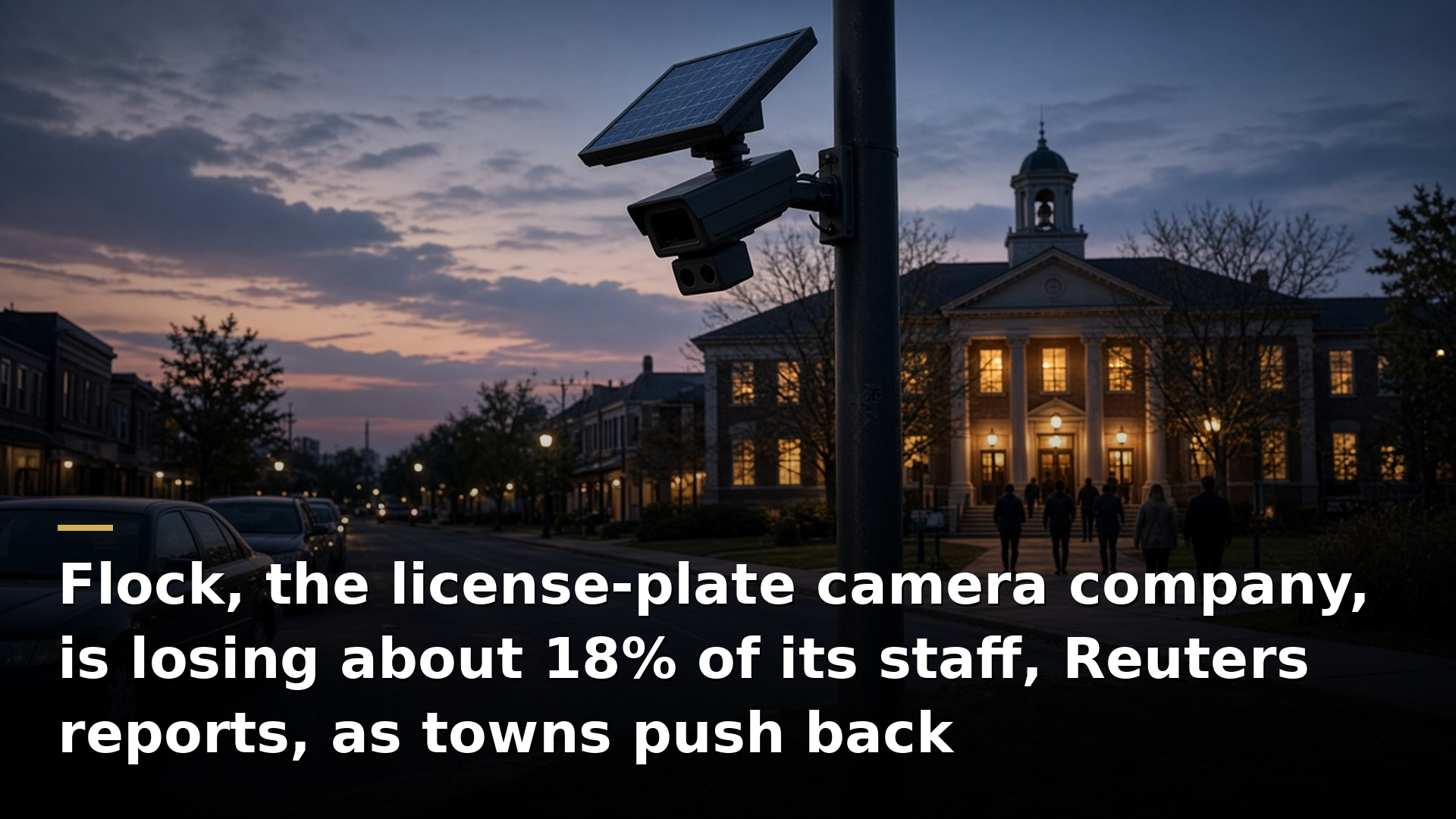
Most businesses lose customers because the product breaks. Flock may be losing some because the product works.
Flock Safety, which makes cameras that read car license plates for police and businesses, plans to let go of about 18% of its employees, roughly 270 people, Reuters reported on Oct. 8, citing unnamed people with direct knowledge of the plans. The company has about 1,500 employees. According to those sources, the cuts follow a buyout offer, and those leaving are expected to go at the end of October.
What Flock makes. Flock's cameras sit on poles beside streets and highways. As cars pass, they read each license plate and record the vehicle, so police can search where a car has been. TechCrunch says Flock has installed more than 100,000 of these cameras across the U.S. Reuters says Flock serves more than 4,800 law enforcement agencies and nearly 1,000 businesses. The company says its technology helps investigate and solve crimes.
Think of it like a toll booth that never charges you but writes down every car that drives past. It stores the list, and the list can be searched later. That can find a stolen car fast. It can also show where an ordinary person drives every day.
Flock's side: a buyout, not a layoff. "Flock recently offered current employees a generous Voluntary Separation Program as part of our efforts to position the company for its next phase of growth," spokesperson Paris Lewbel told TechCrunch on Oct. 9. "This was a voluntary program, not a layoff, and reflects our continued focus on building a strong, sustainable business for the future." Flock declined to comment to Reuters.
How the buyout worked. Wired first reported the program on Sept. 18, citing an internal email. Workers had until Oct. 2 to apply and were expected to hear on Oct. 9. Most who were accepted would leave by Oct. 29. Flock called it the "most generous" package it had ever offered, roughly double its earlier severance offers, Wired reports. One person familiar with the program told Wired they believe that, without the buyouts, Flock almost certainly would have had to lay off some staff.
The critics' side: privacy and misuse. Wired and TechCrunch report growing pushback from communities worried about privacy and misuse. TechCrunch reports that dozens of police officers have been arrested, fired or forced to resign for abusing access to Flock's system to track people without a warrant or permission. It also points to cameras left exposed on the open web and misread plates that led to wrong police stops. Some police departments, including Los Angeles', let their contracts lapse, citing privacy and civil liberties concerns, TechCrunch says.
Customers walking away. Wired reports that one advocacy group counted 93 city and county governments that cut ties with Flock in August alone. Two people told Wired that lost contracts could leave the company short of its revenue goals. Wired also reports that vandalism of its cameras has pushed up costs. The public is split. A Reuters/Ipsos poll found 38% of Americans support Flock cameras in their community and 47% oppose them.
How the CEO sees it. Chief executive Garrett Langley said on the All-In podcast that "the biggest damage" from the backlash had been "internal morale," Wired reports. "And why are they so mad at us for things we don't do? And we just want people to be safe," he said.
What's confirmed, and what isn't. The 18% and 270 figures come from unnamed sources speaking to Reuters. Flock has confirmed the voluntary program but not the numbers. Outlets also give different camera counts: TechCrunch says more than 100,000, Reuters about 120,000.
Why regular people should care
Trust is part of the product. Safety technology only works if the people being watched accept it. Flock's story shows that worries about who sees the data, and who checks the people searching it, can show up on a company's bottom line, not just at a town meeting.
If your town uses license-plate cameras, you can usually ask: how long is the data kept, who can search it, and is every search logged and audited? Many local governments publish these policies, or will share them if residents ask.
What's next
A smaller company, the same questions. The departures are due by the end of October. Watch whether Flock confirms the final numbers, whether more contracts lapse or renew, and whether the company publishes clearer rules on data access. A company that sells safety may find its next product is proof that it can be trusted.