
By Sam Rivera
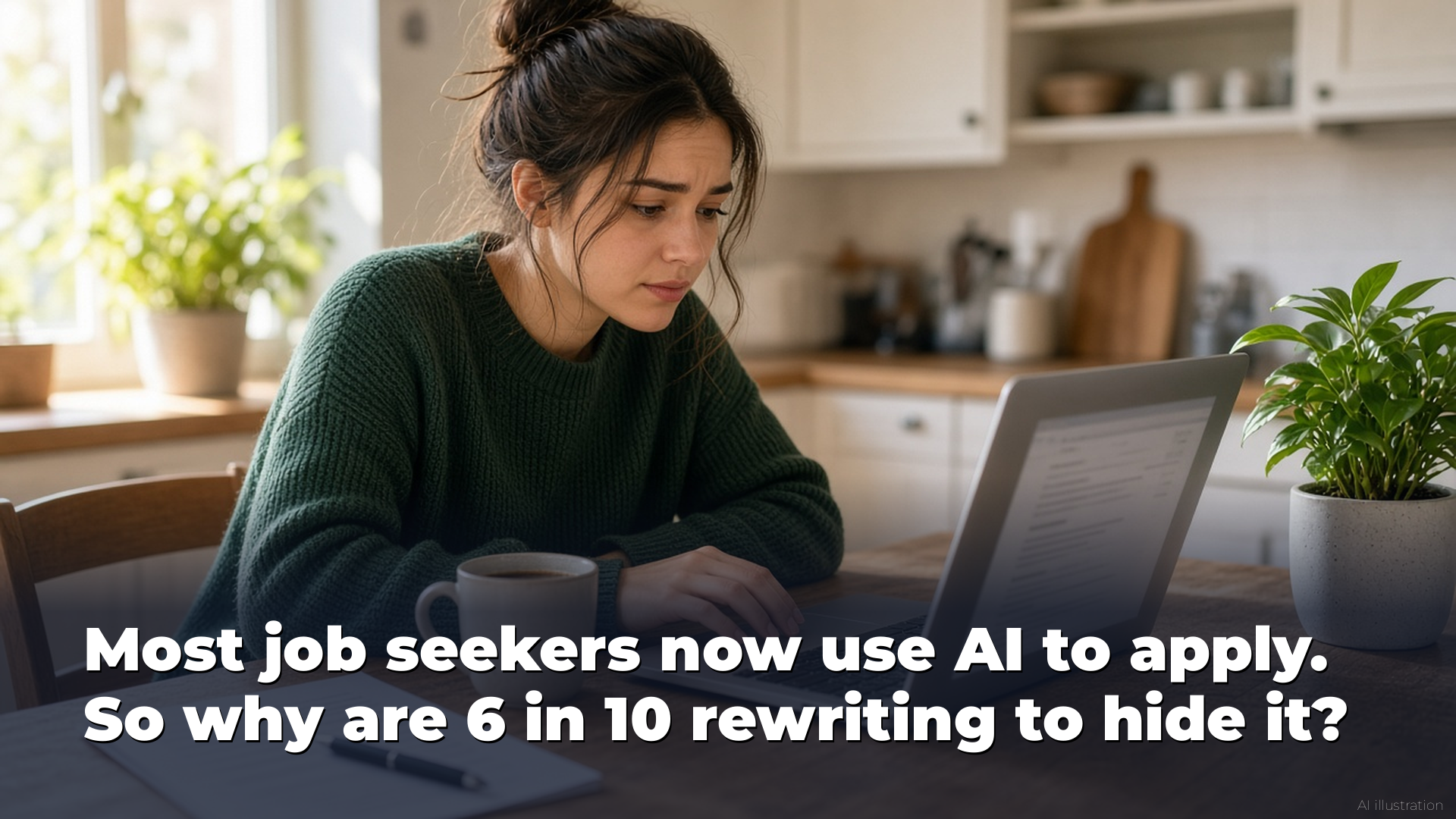
Picture a young graduate at the kitchen table, laptop open, coffee going cold. She has used an AI (artificial intelligence) tool to polish her cover letter. Now she is going back through it, line by line, swapping out words so it sounds more like her.
Why? Because she worries the employer will think a machine wrote it.
A new survey says she is far from alone.
The news. On October 20, hiring software company Greenhouse released its 2026 Future of Hiring Candidate Report. It surveyed more than 2,800 job seekers in the U.S., U.K., Ireland, Germany and Australia. The numbers below are for the 1,200 U.S. job seekers, unless noted.
What the survey found
Most people use AI. 77% used AI in their job search in the past year.
But many hide it. 60% have changed, or thought about changing, how they write so their application isn't mistaken for AI. That is 39% who actually rewrote something, plus 21% who considered it. Younger people worry most: 63% of Gen Z, compared with 42% of Millennials, 31% of Gen X and 27% of Boomers.
Silence is common. 81% were turned down for a job in the past year without ever speaking to anyone at the company, human or AI. Nearly a third (31%) say this happens often or almost always.
Trying to beat the screen. 62% have tried tricks to get past automated screening. These range from using AI to work out what the system is looking for to adding skills or keywords they don't actually have.
Open to AI interviews, with conditions. 48% took an AI interview in the past year. Only 7% would refuse one outright. But 49% want to know a human will review their answers, and 40% want to know how they will be judged.
They want rules. 88% want at least one legal rule that makes employers be upfront when they use AI in interviews. The top request, at 55%, is advance notice.
Why regular people should care
Applying for a job used to feel like knocking on a door. For many people now, it feels more like dropping a letter into a mailbox and never hearing back.
"For the first time I can remember, neither side thinks hiring is working," said Sharawn Tipton, Greenhouse's chief people officer. "Candidates send applications into a black hole, while employers sift through AI-polished resumes that all look the same."
The hopeful part is that job seekers are not asking for much. They want honesty about when AI is used, and a real person somewhere in the loop. Those are fixable things.
Ink, not pencil: This survey comes from Greenhouse, which sells hiring software, including AI interview tools. That gives it a stake in the results, so treat the numbers as one company's survey, not an independent study.
What's next
Tips for now. If you use AI to help write, read the result out loud and change anything that doesn't sound like you. Don't list skills you don't have; it can backfire in an interview. And if a company uses an AI interview, it is fair to ask whether a person will review your answers.
Watch for rules. Most job seekers say they want clear notice when AI is part of hiring. Expect more employers to be asked how, and when, they use it.