
By Sam Rivera
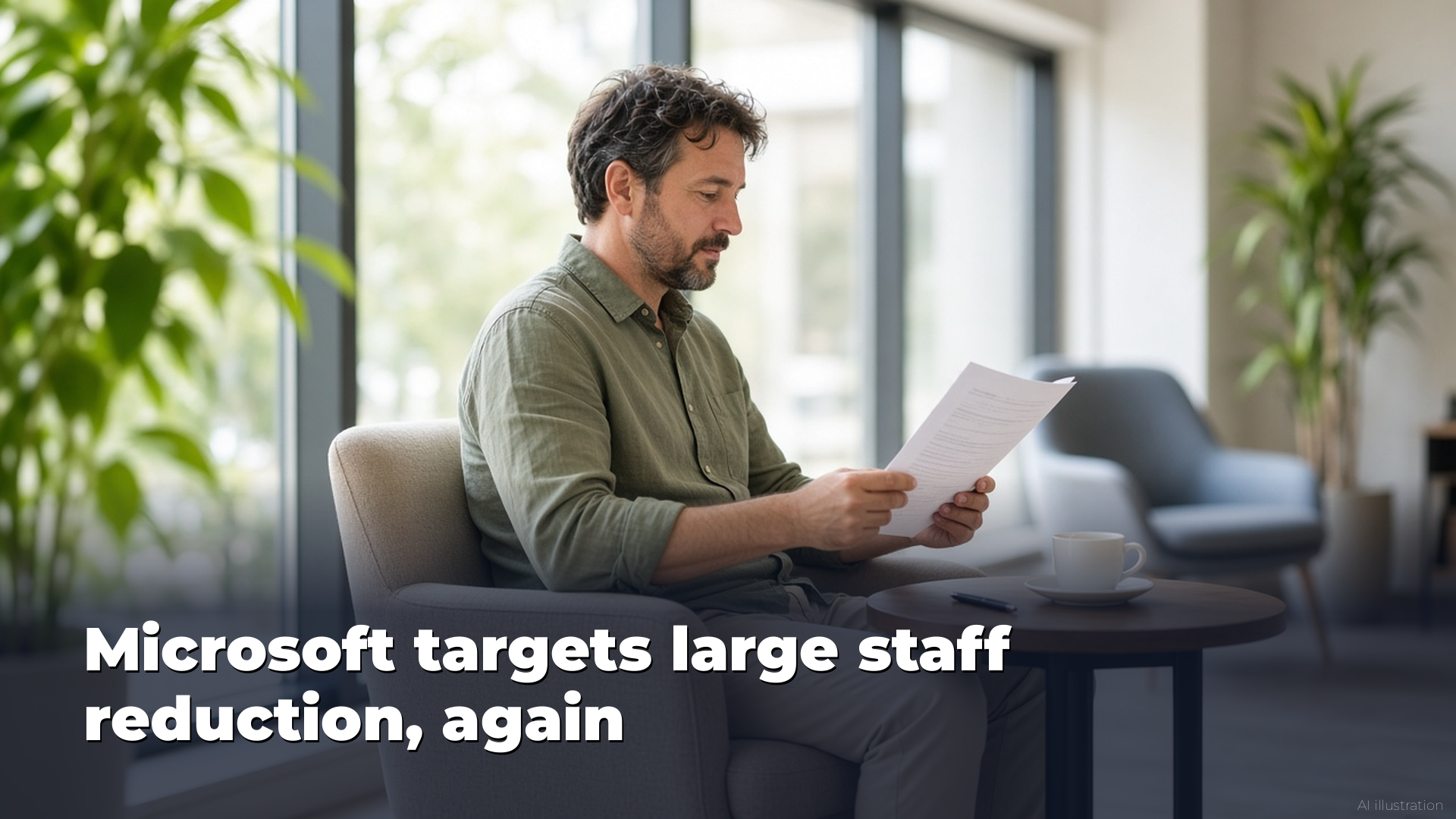
Imagine opening an email at work that says: if you want to leave, we will pay you to go. No one is pushing you out. But the door is open, and it closes in a few weeks. What would you do?
That is the question tens of thousands of Microsoft employees are thinking about this week.
What Microsoft announced
On Monday, October 26, Microsoft introduced a new Voluntary Exit Offer. Amy Coleman, the company's chief people officer, announced it in a memo to employees that Microsoft also posted publicly.
"This offer gives eligible employees who may be considering a future outside the company a new choice to make that transition now with support," she wrote.
According to the memo:
- The offer is open to eligible staff in Canada, India, the United Kingdom and the United States, at level 70 and below on Microsoft's internal job scale.
- It is time-limited and voluntary, with "financial support and career planning resources."
- Only some teams are taking part. "Some organizations are providing the Voluntary Exit Offer, and some are not," Coleman wrote.
How many people, and what is in it
Microsoft's public memo does not give a number. About 60,000 people are eligible, Microsoft told GeekWire; CNBC reported the same figure from a person familiar with the matter. That is roughly a quarter of Microsoft's 223,000 employees, its count as of June 30.
According to what the company told GeekWire:
- The package matches Microsoft's standard severance: base pay based on years worked and job level, continued stock vesting, health coverage for a fixed period, and help finding a new job.
- There is no age or years-of-service requirement, and job performance is not a factor.
- Employees have until the first week of December to decide. CNBC, citing its source, reported that those who accept would leave on December 31.
- Microsoft expects a much smaller share to accept than the roughly 30% who took its spring retirement offer.
- Team leaders decide whether their groups take part; the sales organization and some engineering and corporate groups are not participating.
Buyouts, not layoffs
Ink, not pencil: these are buyouts, not layoffs. No one has to leave. Microsoft told GeekWire the offer is not a sign it needs fewer people. The company also said it does not replace layoffs, which remain part of its approach depending on business conditions.
It follows a voluntary retirement program in April and 4,800 job cuts in July, both reported by GeekWire and CNBC. Coleman said the new offer "builds on what we learned earlier this year through the Voluntary Retirement Program."
What people usually weigh
A buyout is a bit like being offered cash to give up your seat on a busy flight. For some, it is a gift; they were planning to leave anyway. For others, the next flight might be a long wait. People offered buyouts commonly think about:
- How long the money lasts compared with how long a new job search might take.
- Health coverage, and what happens when it ends.
- Unvested stock, and what they would keep.
- Taxes, which differ between countries, including between Canada and the US.
This is general information, not advice. Anyone offered a package should read their own details closely and, if they can, talk to a financial or legal professional.
Why regular people should care
Big employers are trying new ways to change the size and shape of their teams. Buyouts give workers a choice that layoffs do not. If one is ever offered to you, the decision is yours, and the clock matters. Knowing the questions ahead of time makes it easier.
What's next
Microsoft reports quarterly earnings on Wednesday, October 28. GeekWire reported the results could include an estimate of what the offer will cost. Eligible employees decide by early December.