
By Sam Rivera
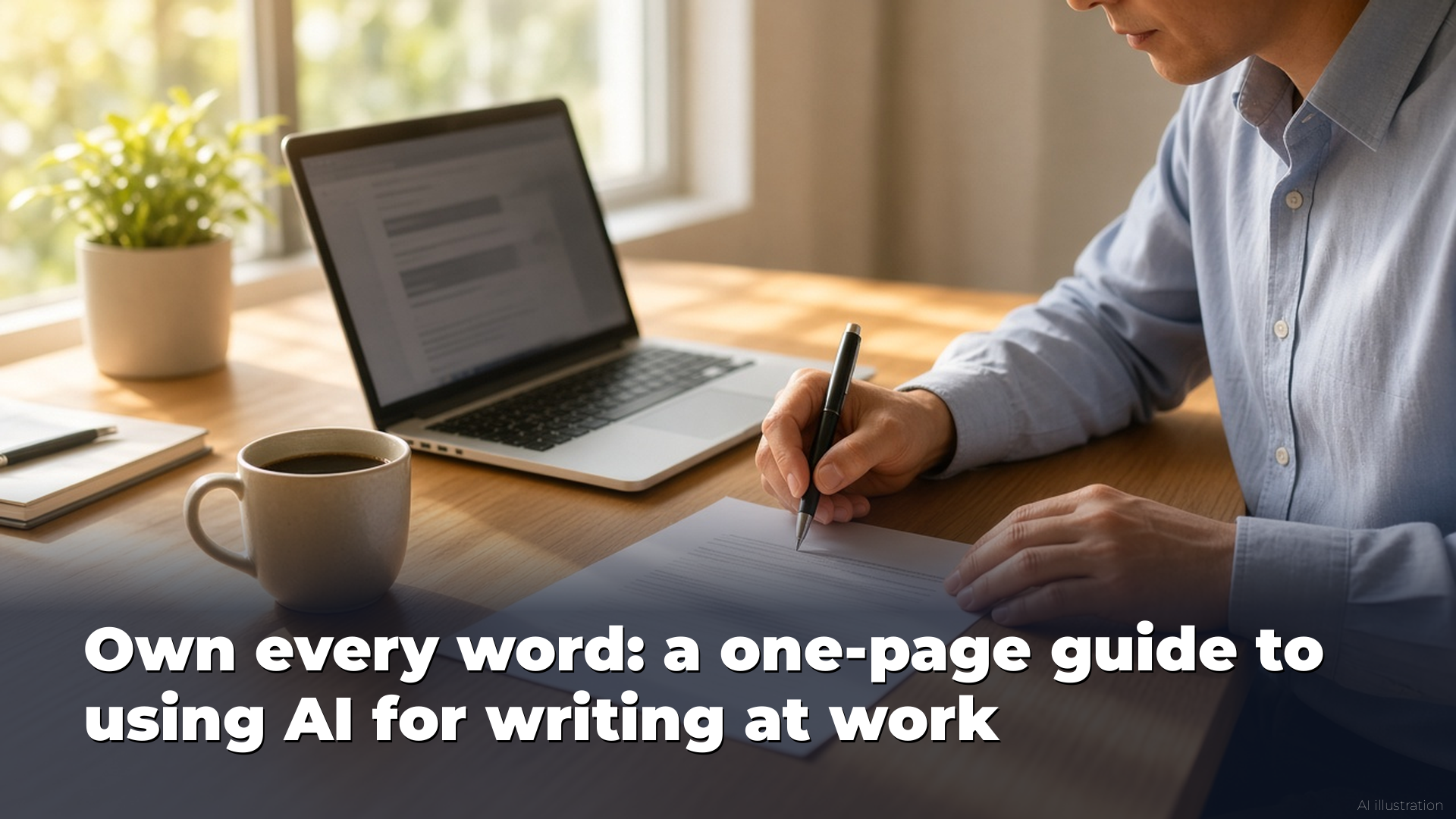
You open a report from a colleague. It is long, smooth and tidy. Halfway through, you wonder: did anyone actually think about this? That small doubt is the real cost when AI writes our work for us. The good news is that a few simple habits fix most of it.
The context. Steve Huynh spent almost 20 years at Amazon and left in 2024. In an opinion essay published October 14, he passed on a story from someone in his community. A senior product manager, he wrote, was plainly reading his own six-page document for the first time, in the meeting where he presented it. Huynh says a document used to be "proof of thought." His rule for fixing that is short: "You own every word."
These are his opinions and secondhand reports, not Amazon policy. But the idea works for anyone with a job.
Think of it like signing a birthday card someone else wrote. Your name is at the bottom, so the words had better be ones you mean.
Five habits you can start today
1. Draft yourself first. Before you open an AI tool, write a few rough lines. What do you want to say? Who is it for? What should they do next? This is where the thinking happens. Then use AI to tidy, shorten or reorganise. Skip this step and you may end up with something that sounds finished but says very little.
2. Check every fact. AI tools can state wrong things with total confidence. Check every name, number, date, quote and link against the original source. If you cannot check it, cut it.
3. Keep your voice. Read the final version out loud. Does it sound like you? Cut words you would never say. Your colleagues know how you write, and a sudden change can feel strange. Short and plain usually beats long and polished.
4. Be open when it matters. You do not need to flag a spell-check. But if AI shaped the substance, say so. This matters most in reports, proposals, reviews of people, or anything a decision will rest on. A short note helps: "I used an AI tool to help draft this, and I checked it." If you quote AI text directly, say that it is AI text.
5. Never paste confidential data. Do not put customer details, colleagues' personal information, passwords, contracts, financial results or unreleased plans into a tool your employer has not approved. Check your company's AI policy first. If there isn't one, ask your manager before you start.
Why regular people should care
Most of us are judged partly on what we write: emails, updates, reviews, proposals. When readers start to suspect the writing is hollow, they stop reading carefully. Good ideas get skipped along with the padding. Habits like these protect your reputation and respect other people's time.
Huynh offers a useful sorting test. Let AI help freely where mistakes are cheap and easy to undo, like meeting notes or a status update. Keep a human writing and a human reading when a decision is big and hard to reverse.
Ink, not pencil: If your name is on it, you are responsible for every sentence, whoever or whatever typed it first.
What's next
A one-minute check before you send. Ask yourself three questions. Could I explain this without the page in front of me? Have I checked every fact? Would I be comfortable if my reader knew how it was made? If all three answers are yes, press send. If not, give it five more minutes.