By Sam Rivera
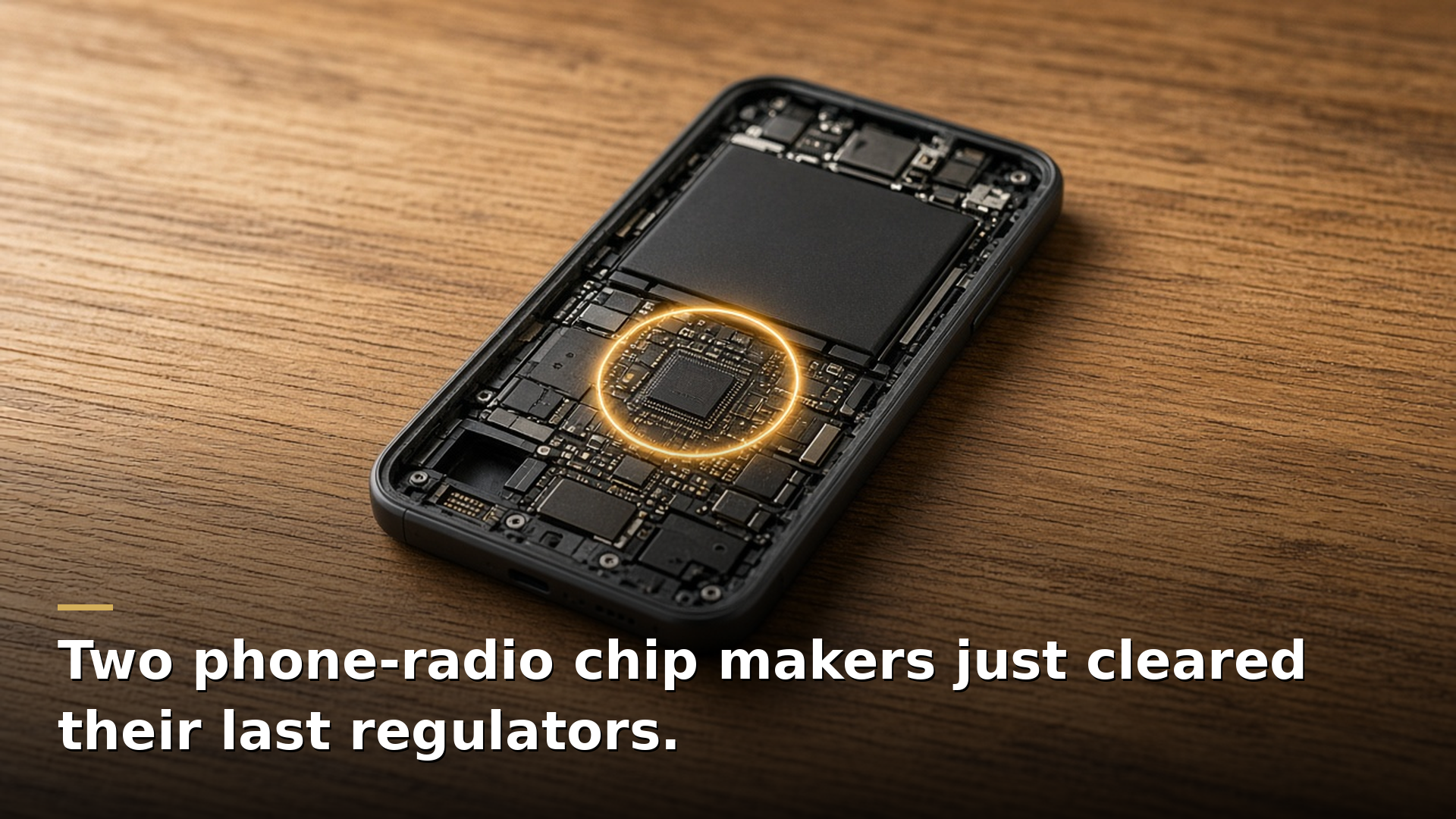
Your phone does not care what the chip company is called. It cares that a tiny part can turn a voice, a text, or a pin on a map into a radio signal — and Skyworks says it now has every regulatory clearance it needs to combine with Qorvo, the other company behind a lot of those quiet parts.
On Sept. 30, 2026, Skyworks Solutions said it has received all necessary regulatory clearances for the deal the two companies announced on Oct. 28, 2025. They expect to close on or about Oct. 5, 2026, if the remaining customary closing conditions are satisfied or waived. The transaction is cash and stock. Together, Skyworks says, they would be a U.S.-based company spanning high-performance radio-frequency, analog, and mixed-signal semiconductors — the chips that sit between the digital brain of a device and the messy analog world of waves, sound, and sensors.
That is the relatable layer. Skyworks describes itself as a maker of analog and mixed-signal chips for smartphones, tablets, wearables, home networks, broadband, cars, factories, medical gear, and aerospace and defense, among other uses. Qorvo, in this release, is the complementary portfolio: more of the radio-frequency and analog craft that makes a handset find a tower and a headset find your ear. You do not buy these chips at a counter. You buy the phone, the router, the car, or the radio, and the chips are already inside.
Skyworks' investor page still headlines the original Oct. 28, 2025 announcement as a plan to create a "$22 billion" U.S.-based leader in that same category. The Sept. 30 clearance release does not repeat a dollar figure and does not define what the $22 billion measures, so this piece does not treat it as a purchase price. There is no deal value in the clearance announcement to quote.
Some paperwork is still moving beside the merger. Skyworks has offered to exchange Qorvo senior notes due in 2029 and 2031 for new Skyworks notes, tied to consent solicitations filed with the SEC. Those exchange offers are conditioned on the merger closing. Skyworks says the merger is not conditioned on how the exchanges turn out. The offers had been expected to expire at 5:00 p.m. New York time on Oct. 2, 2026, and Skyworks said it anticipated extending that deadline to a time after closing. That is bond housekeeping, not the reason your phone connects.
Ink, not pencil: "all necessary regulatory clearances" is Skyworks' statement, and the close is still "on or about" Oct. 5, subject to leftover customary conditions. Clearance is not the same thing as a signed closing. The company's own caution language says the date, the benefits, and the integration can slip, and that a deal announced is not a deal finished. Nothing in the Sept. 30 release promises a cheaper phone on Monday.
Monday-morning stake: the call you make, the podcast that does not drop, the car that finds the road — each one leans on radio chips almost nobody names. If these two catalogs become one, more of that plumbing comes from a single supplier with a broader shelf. The human question is dull and real: do handsets, home routers, and radios get a steadier supply of the parts that make wireless ordinary, or do buyers simply memorize one new name at the next teardown.
Why regular people should care
Wireless feels like software because the apps are what we tap. The hard part is still analog. Combining two specialists in that layer is how the industry tries to keep phones, cars, and networks stocked with the small parts that turn electricity into a signal and a signal back into electricity. A bigger U.S.-based catalog does not, by itself, make coverage better. It does change who designs the next generation of those parts, and how many engineering teams sit under one roof when a phone maker asks for the radio section of a future device.
What's next
The date to watch is on or about Oct. 5, 2026. Either the companies close, or a customary condition holds them up and the "on or about" does real work. After that, the interesting news is not another clearance headline. It is which products keep both brand names, which engineering groups actually merge, and whether phone and radio makers talk about supply in the ordinary way — lead times, not slogans. Skyworks also said it would put out a separate release if it extends the note-exchange deadline. That is a side clock, not the main one.